

- seo
- June 23, 2026
Key Stages of Factory Construction from Design to Handover
Factory construction stages must be managed carefully because an industrial facility is not a standard building. A factory is designed to support production, machinery, storage, logistics, workers, safety systems, utilities, and long-term business operations. Every stage, from early planning to final handover, has a direct effect on how the facility will perform after it starts operating.
A successful factory construction project requires more than concrete, steel, walls, and roofing. It requires clear planning, coordinated design, strong site execution, safe working methods, technical MEP systems, fire protection, durable flooring, practical external works, and complete testing before operation. If one stage is poorly managed, the project may face delays, cost increases, operational problems, or maintenance issues after handover.
In Saudi Arabia, factory construction often involves industrial zone requirements, authority approvals, civil defense standards, climate considerations, utility connections, heavy equipment needs, and strict project schedules. For investors and business owners, understanding the key stages of factory construction helps them make better decisions and choose the right contractor for the project.
Stage 1: Project Concept and Business Requirements
The first stage of factory construction begins with understanding the business need. Before any design or construction work starts, the owner must define the purpose of the factory and the operational requirements it must support.
This includes the type of production, expected capacity, machinery needs, raw material storage, finished goods storage, loading areas, staff facilities, administrative spaces, utility rooms, and future expansion plans. A factory for food production will have different requirements from a metal fabrication workshop, logistics warehouse, packaging facility, or manufacturing plant.
At this stage, the owner should answer practical questions. What will be produced? How will materials move inside the facility? What machines will be installed? What utilities are required? How many workers will use the facility? How will trucks enter and exit? Will the factory need expansion in the future?
A clear concept helps the design and construction team build a facility that supports operations instead of creating limitations later.
Stage 2: Feasibility Study and Budget Planning
After defining the concept, the next stage is feasibility and budget planning. This stage helps the investor understand whether the project is financially, technically, and operationally practical.
A feasibility study may include land evaluation, estimated construction cost, authority requirements, expected timeline, utility availability, operational needs, and possible risks. It also helps identify major cost items such as structural works, MEP systems, fire protection, flooring, external roads, drainage, and equipment-related construction requirements.
Budget planning should be realistic. Factory construction costs are affected by building size, structural system, land condition, ceiling height, MEP complexity, fire safety requirements, flooring specifications, external works, and finishing quality. A weak budget can create pressure during execution and may lead to poor decisions.
A professional contractor can support this stage by providing practical cost insight, identifying construction risks, and helping the owner understand what must be planned early.
Stage 3: Site Selection and Site Assessment
Site selection is a critical stage in factory construction. The site must support both construction and future operations. Investors should consider access roads, truck movement, utility connections, industrial zone requirements, drainage, soil conditions, land size, future expansion space, and proximity to suppliers or customers.
Once the site is selected, a detailed site assessment should be completed. Soil investigation helps determine foundation requirements. Topographic surveys help understand levels and drainage. Access studies help plan material delivery, equipment movement, and external roads.
In Saudi Arabia, many factories are located in industrial cities or designated industrial zones. These areas may have specific construction rules, safety standards, utility procedures, and approval requirements. Understanding these requirements early helps reduce delays.
A site that is not studied properly can increase project costs later. For example, weak soil may require special foundations, poor drainage may require additional infrastructure, and limited access may affect construction logistics.
Stage 4: Architectural and Engineering Design
The design stage translates the business concept into drawings and technical documents. This includes architectural design, structural design, mechanical design, electrical design, plumbing design, fire protection design, drainage design, external works, and finishing specifications.
Factory design should be practical, not only visually acceptable. The layout must support production flow, storage movement, machinery placement, worker circulation, safety exits, loading areas, and maintenance access. Spaces should be arranged in a way that improves efficiency and reduces unnecessary movement.
Structural design must consider equipment loads, roof spans, high ceilings, steel structure requirements, foundation needs, wind loads, and future expansion possibilities. MEP design must consider power loads, lighting, ventilation, HVAC, water supply, drainage, fire protection, and equipment connections.
Good factory design also considers maintenance. Electrical panels, HVAC units, pumps, fire systems, and utility routes should be accessible for inspection and repair. Poor maintenance access can create operational problems after handover.
Stage 5: Authority Approvals and Permits
Factory construction usually requires approvals before construction begins. These approvals may depend on the project location, industrial activity, building size, safety requirements, utility needs, and local regulations.
Approvals may involve municipality requirements, industrial city approvals, civil defense requirements, environmental requirements, utility connections, and other authority-related procedures. Missing or incomplete approvals can delay the project and affect the construction schedule.
The project team should prepare the required drawings, documents, technical submissions, and compliance details early. A professional contractor and consultant can help coordinate these requirements and reduce the risk of approval delays.
Authority approvals should not be treated as a minor administrative step. They are part of the project timeline and should be planned from the beginning.
Stage 6: Contractor Selection and Construction Planning
Choosing the right factory construction contractor is one of the most important stages of the project. Factory construction requires experience in industrial buildings, structural steel, civil works, MEP systems, fire protection, external works, safety, and project management.
The contractor should understand how to build a facility that supports industrial operations. The selection process should consider similar project experience, technical capabilities, manpower, equipment, quality control procedures, safety management, scheduling, procurement planning, and handover process.
After selecting the contractor, the construction planning stage begins. This includes preparing the project schedule, procurement plan, manpower plan, equipment plan, safety plan, quality control procedures, site logistics plan, and communication process.
Strong construction planning helps reduce delays and gives the project a clear execution path.
Stage 7: Site Mobilization and Preparation
Site mobilization is the stage where the contractor prepares the site for construction. This may include fencing, temporary offices, storage areas, temporary utilities, access routes, safety signage, equipment movement, and worker facilities.
Site preparation may also include clearing, grading, excavation planning, temporary drainage, and layout marking. Proper site organization improves safety and productivity. Materials should be stored correctly, equipment movement should be controlled, and access routes should support construction activities.
In factory construction, site logistics are especially important because large materials, steel components, heavy equipment, and trucks may need to move on site. Poor logistics can create delays and safety risks.
Stage 8: Earthworks and Foundation Works
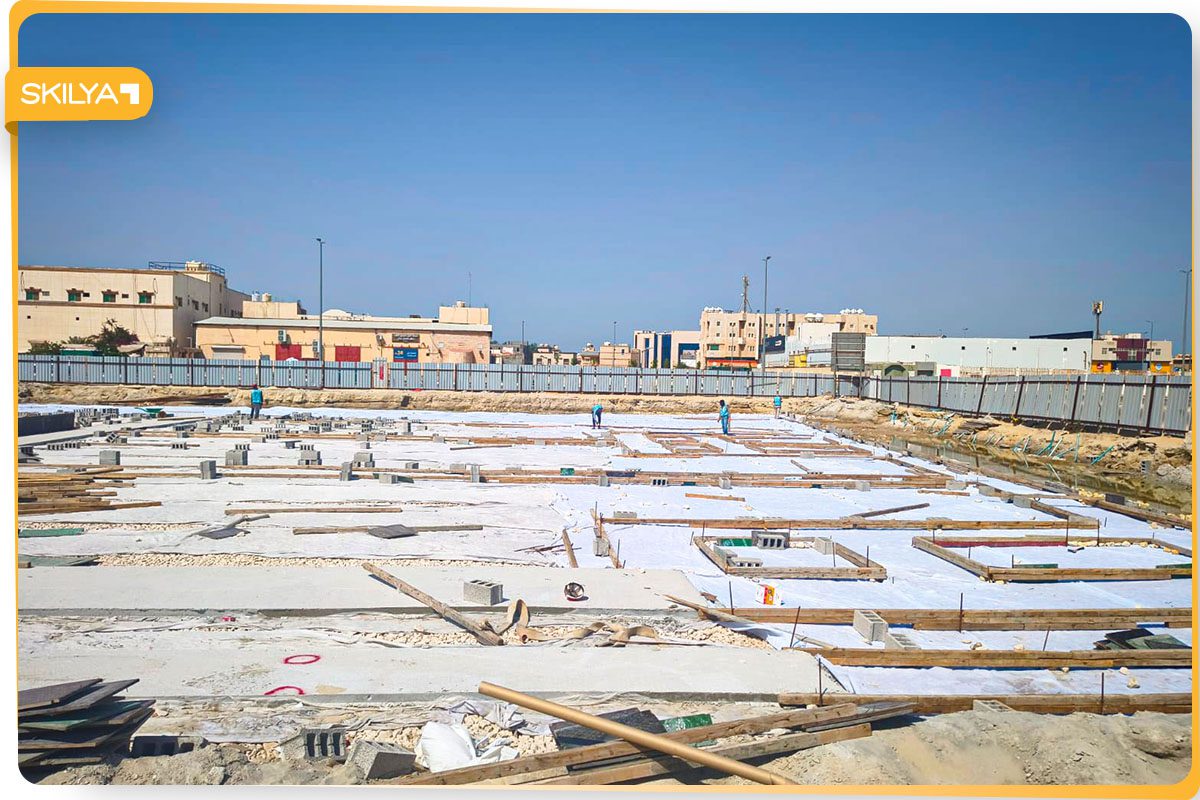
Earthworks and foundations form the physical base of the factory. This stage may include excavation, backfilling, compaction, soil improvement, foundation construction, anchor bolts, concrete works, and underground services.
Foundation design depends on soil conditions, structural loads, equipment requirements, and building type. Industrial facilities may require stronger foundations because of machinery loads, steel structures, storage loads, or special equipment bases.
Quality control is critical during this stage. Soil compaction, reinforcement placement, formwork, concrete quality, levels, and anchor bolt alignment must be inspected carefully. Mistakes in foundation works can affect the entire building and may be difficult to correct later.
Stage 9: Structural Works and Steel Installation
Structural works are a major stage in factory construction. Many factories use structural steel because it provides wide spans, fast installation, high flexibility, and open spaces suitable for production or storage.
This stage may include steel fabrication, delivery, erection, bolting, welding, alignment, roofing structure, cladding support, mezzanine elements, and structural inspections. If the factory uses reinforced concrete, this stage may include columns, beams, slabs, walls, and roof structures.
Structural execution must follow approved drawings and safety procedures. Steel installation often involves lifting operations, working at height, cranes, and strict alignment requirements. Professional supervision is essential to maintain safety and quality.
A well-executed structural stage allows the rest of the project to move smoothly.
Stage 10: Roofing, Cladding, and Building Envelope
The building envelope protects the factory from weather, heat, dust, and external conditions. This stage may include roofing sheets, insulation, wall cladding, doors, windows, skylights, louvers, gutters, downspouts, and external sealing.
In Saudi Arabia, roofing and insulation are especially important because of climate conditions. Poor roofing or weak insulation can increase heat gain, reduce worker comfort, increase HVAC load, and affect energy consumption.
The building envelope should also support ventilation, natural lighting where suitable, waterproofing, and long-term durability. Installation quality matters because gaps, poor sealing, or incorrect fixing can lead to leaks, heat problems, or maintenance issues.
Stage 11: MEP Installation
MEP installation is one of the most complex factory construction stages. It includes electrical systems, HVAC, ventilation, plumbing, drainage, fire protection, lighting, panels, pumps, equipment connections, and other utility systems.
MEP work must be coordinated with the structure, layout, production requirements, and maintenance access. Electrical systems should support machinery loads and future expansion. HVAC and ventilation should support comfort and process needs. Plumbing and drainage should match operational usage. Fire protection must comply with safety requirements.
MEP coordination should be checked before installation begins. Poor coordination can cause conflicts, delays, and rework. Proper supervision, shop drawings, testing, and inspections are essential during this stage.
Stage 12: Flooring and Internal Works
Factory flooring must be durable and suitable for the facility’s operations. This stage may include concrete floor slabs, surface hardeners, epoxy coatings, anti-slip finishes, expansion joints, floor drains, and special industrial flooring systems.
The type of flooring depends on the factory activity. Some facilities need chemical resistance, heavy load capacity, forklift movement, easy cleaning, or impact resistance. Poor flooring can affect operations and create maintenance problems.
Internal works may also include partitions, doors, windows, offices, staff facilities, toilets, utility rooms, painting, ceilings, and other finishing elements. These works should be practical, durable, and easy to maintain.
Stage 13: External Works and Infrastructure
External works support the factory’s daily operation. This stage may include internal roads, parking areas, loading docks, boundary walls, gates, drainage, external lighting, utility connections, landscaping, security systems, and access control.
Industrial facilities often require strong roads and pavements because of heavy vehicle movement. Loading areas should be designed for trucks and safe material handling. Drainage should prevent water accumulation near buildings, roads, and storage areas.
External works are essential for logistics, safety, and long-term functionality. They should be planned with the same level of importance as the main building.
Stage 14: Testing and Commissioning
Before the factory can operate, all systems must be tested. Testing and commissioning confirm that electrical, HVAC, ventilation, plumbing, drainage, fire protection, lighting, pumps, panels, and other systems are working properly.
This stage helps identify defects before handover. It also ensures that the facility is safe and ready for operation. Fire protection systems, in particular, must be tested carefully because they are connected to safety and authority approvals.
Testing should be documented through reports, inspection records, and approved checklists.
Stage 15: Final Handover and Documentation
The final stage of factory construction is handover. A proper handover should include completed works, final inspections, snag list closure, as-built drawings, warranties, operation manuals, test reports, authority approvals, and maintenance guidance.
Handover documentation is very important for factory owners because industrial buildings require continuous maintenance and system management. Without proper documentation, future operation and repair can become difficult.
A professional contractor ensures that the factory is not only physically complete but also ready for safe and efficient use.
Why Skilya Supports Factory Construction from Design to Handover
Skilya Construction Company provides integrated construction and contracting services for industrial and commercial projects across Saudi Arabia and the Gulf region. The company supports factory construction through general contracting, civil works, structural steel, MEP systems, HVAC, electrical works, plumbing, fire protection, finishing works, infrastructure, road construction, and interior-related services.
Skilya understands that each factory construction stage must be managed with planning, technical accuracy, quality control, safety, and coordination. From early preparation to final handover, Skilya helps project owners build facilities that support long-term operations and business growth.
For investors and business owners looking for a reliable construction company in Saudi Arabia, Skilya offers the capabilities needed to manage factory projects from concept to completion.
Conclusion
Factory construction stages must be managed carefully to create a facility that is functional, safe, durable, and ready for long-term operation. The process begins with business requirements and continues through feasibility, site selection, design, approvals, contractor selection, site preparation, foundations, structural works, MEP installation, finishing, external works, testing, commissioning, and handover.
Each stage affects the next one. Strong planning and professional execution help reduce delays, control costs, improve quality, and support future operations.
Working with an experienced construction partner like Skilya helps investors manage the full factory construction process with greater confidence and better long-term results.
FAQs
What are the main stages of factory construction?
The main stages include project concept, feasibility study, site selection, design, approvals, contractor selection, site preparation, foundations, structural works, MEP installation, flooring, external works, testing, commissioning, and final handover.
Why is planning important in factory construction?
Planning helps define operational requirements, reduce risks, control costs, prepare schedules, coordinate systems, and ensure that the factory supports long-term business operations.
What makes MEP installation important in factories?
MEP systems support power, HVAC, ventilation, plumbing, drainage, fire protection, lighting, equipment connections, and overall factory performance.
What should be included in factory handover?
Factory handover should include final inspections, testing reports, as-built drawings, warranties, operation manuals, authority approvals, snag list closure, and maintenance guidance.
Why choose Skilya for factory construction?
Skilya provides integrated factory construction services, including civil works, structural steel, MEP systems, HVAC, electrical, plumbing, fire protection, finishing works, infrastructure, road construction, project management, and quality control.