

Steel Fabrication
Steel fabrication services is a critical part of modern construction, especially for industrial, commercial, infrastructure, and large-scale building projects. It transforms raw steel into accurate structural components that can be used in buildings, warehouses, factories, bridges, platforms, frames, supports, and many other construction applications.
At Skilya, we provide steel fabrication solutions designed to support durable, efficient, and high-quality construction projects in Saudi Arabia and the GCC. Our work combines engineering coordination, fabrication accuracy, quality control, and practical site execution to help clients achieve reliable steel structures that meet project requirements.
What Is Steel Fabrication?
Steel fabrication is the process of cutting, bending, welding, assembling, and finishing steel materials to create structural and non-structural components for construction projects. Instead of using steel in its raw form, fabrication prepares each piece according to approved drawings, dimensions, load requirements, and project specifications.
The steel fabrication process may include beams, columns, plates, frames, platforms, stairs, supports, trusses, canopies, and other customized steel elements. These components are then transported to the site for installation or integration into the main construction works.
Professional steel fabrication requires accurate engineering, skilled labor, advanced equipment, and strict quality control. Every measurement, cut, weld, and connection must be executed carefully because fabricated steel often carries major structural loads and affects the safety and performance of the building.
Why Steel Fabrication Matters in Construction
Steel fabrication plays an essential role in construction because it provides strength, durability, flexibility, and speed. Steel structures are widely used in projects that require high load capacity, long spans, fast assembly, and reliable performance under different operating conditions.
In industrial and commercial projects, fabricated steel can support large open spaces, heavy equipment, mezzanine floors, roofing systems, warehouses, production areas, and structural frames. It also allows architects and engineers to create practical designs that are difficult to achieve with traditional materials alone.
For project owners, steel fabrication helps improve construction efficiency by preparing components off-site before installation. This reduces site work, shortens execution time, and improves coordination between fabrication and erection.
Key Steel Fabrication Processes
1. Cutting
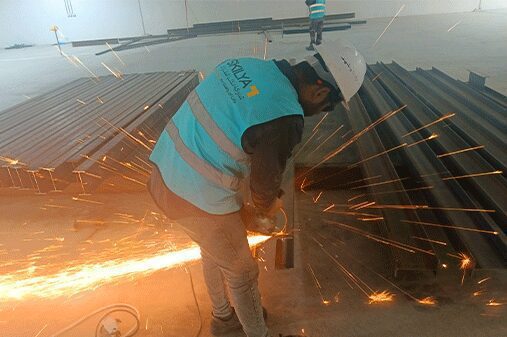
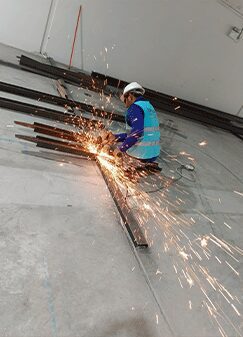
Cutting is the first stage of steel fabrication. Steel plates, beams, pipes, and sections are cut according to the required measurements shown in the fabrication drawings. Accurate cutting is essential to ensure that each component fits correctly during assembly and installation.
2. Bending and Forming
After cutting, some steel components may need bending, rolling, or forming to achieve specific shapes or angles. This process is used for curved elements, brackets, plates, architectural steel details, and customized components.
3. Welding
Welding joins steel components together to create strong and stable assemblies. It is one of the most important stages in fabrication because weld quality directly affects the strength and safety of the final structure. Professional steel fabrication requires qualified welders, suitable welding methods, and inspection procedures.
4. Assembly
Once individual pieces are prepared, they are assembled into larger steel components or structural units. Assembly may include bolting, welding, alignment checks, and dimensional verification to confirm that the fabricated parts match the approved design.
5. Surface Preparation and Finishing
Finishing protects fabricated steel from corrosion, weather exposure, and long-term wear. This may include cleaning, blasting, priming, painting, galvanizing, or applying protective coatings depending on the project requirements and environmental conditions.
Benefits of Steel Fabrication
Strength and Durability
Steel is known for its high strength-to-weight ratio, making it suitable for projects that require strong and long-lasting structures. Properly fabricated steel can withstand heavy loads, demanding environments, and long-term use.
Design Flexibility
Steel fabrication allows custom shapes, sizes, and structural solutions based on the needs of each project. This flexibility makes steel suitable for warehouses, factories, commercial buildings, industrial facilities, platforms, and special structures.
Faster Project Delivery
Fabricated steel components can be prepared before or during site preparation, which helps reduce construction time. Once the site is ready, steel parts can be transported and installed more efficiently.
Cost Efficiency
Steel fabrication can support cost control through accurate material usage, reduced waste, faster installation, and fewer on-site modifications. When fabrication is coordinated properly with engineering and site execution, it helps minimize delays and rework.
Quality Control
Factory-based fabrication allows better control over measurements, welding, finishing, and inspections. This improves consistency and reduces errors that may occur when all work is done directly on-site.
Applications of Steel Fabrication
Steel fabrication is used in a wide range of construction and industrial projects, including:
Industrial Facilities
Factories, workshops, processing plants, and production facilities often depend on fabricated steel for frames, platforms, supports, equipment bases, mezzanines, and roofing structures.
Warehouses and Logistics Buildings
Warehouses require large open spaces and durable structures. Fabricated steel helps create wide-span buildings that support storage systems, movement areas, and future expansion.
Commercial Buildings
Steel fabrication is used in showrooms, office buildings, shopping facilities, canopies, staircases, structural frames, and architectural steel elements.
Infrastructure and Support Structures
Steel components are also used in bridges, walkways, platforms, service areas, support frames, and other infrastructure-related applications.
Pre Engineered Buildings
Steel fabrication is a major part of Pre Engineered Buildings, where steel frames and components are manufactured according to the required building design before being assembled on-site.
Skilya’s Steel Fabrication Services
Skilya provides steel fabrication services as part of its integrated construction and contracting capabilities. Our team supports projects that require accurate steel components, reliable structural performance, and coordination between fabrication and site execution.
Our steel fabrication services may include structural steel elements, frames, supports, industrial steel components, steel platforms, miscellaneous steel, and customized fabrication works based on project needs.
We focus on understanding each project’s technical requirements before execution, including load conditions, building usage, site requirements, installation sequence, safety considerations, and coordination with civil and MEP works.
Our Approach to Steel Fabrication Projects
Engineering Coordination
Steel fabrication must begin with proper coordination between engineering drawings, shop drawings, project specifications, and site requirements. Skilya works to align fabrication details with construction needs to reduce errors and improve installation efficiency.
Accurate Fabrication
Accuracy is essential in steel fabrication. Our process focuses on precise cutting, welding, assembly, and finishing to ensure that fabricated components are ready for safe and efficient installation.
Quality and Inspection
Quality control is applied throughout the fabrication process. This includes checking dimensions, weld quality, material suitability, surface preparation, and final finishing before delivery or installation.
Site Execution Support
Steel fabrication does not end in the workshop. Proper transportation, handling, lifting, alignment, bolting, welding, and installation are all essential to the success of the project. Skilya supports site execution to ensure that fabricated steel components are installed according to project requirements.
Why Choose Skilya for Steel Fabrication?
Choosing the right steel fabrication partner is important because fabricated steel affects the strength, safety, cost, and timeline of the entire project. Skilya combines construction experience, steel fabrication capability, and project management knowledge to support clients across industrial, commercial, and large-scale construction sectors.
With experience in contracting, industrial projects, steel structures, and integrated construction services, Skilya helps clients achieve practical steel solutions that are built for performance and long-term use.
Whether your project requires steel frames, industrial supports, warehouse structures, platforms, or customized fabrication works, Skilya can provide steel fabrication services that align with your technical and operational needs.
Contact Skilya
If you are planning a construction, industrial, warehouse, or commercial project that requires steel fabrication, Skilya can support your project from planning and coordination to fabrication and installation.
Contact Skilya today to learn more about our steel fabrication services and how our team can help deliver strong, accurate, and durable steel solutions for your next project.
Ready to Get Started? Contact Us Today!
Phone: +966 138 999 045
- Email: info@skilya.com
- Visit our website at skilya.com to learn more about our services and view our project portfolio.
Our Brochure