



- seo
- No Comments
- February 19, 2026
Managing Time and Budget in Large Residential Compounds
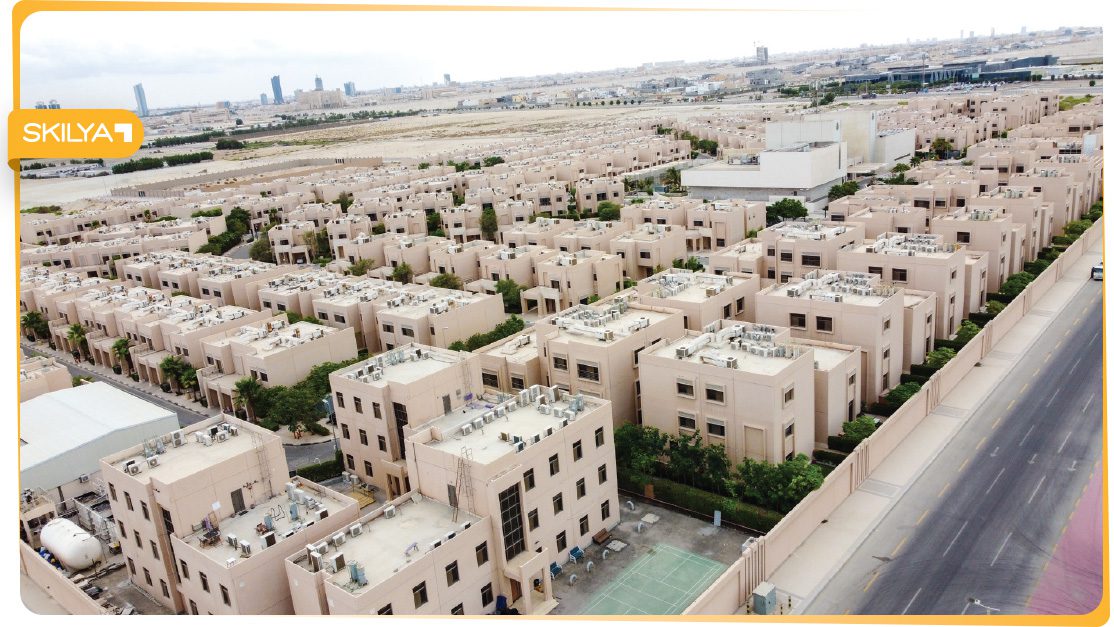
Large residential compounds are among the most demanding project types in Saudi Arabia’s construction market. With hundreds or even thousands of units, shared amenities, infrastructure works, and phased delivery, managing time and budget becomes a complex balancing act. Small inefficiencies can quickly scale into major delays or cost overruns if not addressed through structured planning and disciplined execution.
Understanding how professional contractors manage schedules and budgets in large residential compounds helps project owners protect investment value and achieve predictable delivery.
Why Time and Budget Control Is Challenging at Scale
Large residential compounds introduce challenges that smaller projects rarely face, including:
- Multiple buildings and repetitive scopes
- Extensive infrastructure and external works
- Phased construction and handovers
- High coordination demand across trades
These factors increase exposure to delays, variations, and productivity loss if not managed systematically.
Early Planning and Master Scheduling
Effective time and budget control starts with early planning. Contractors develop master schedules that break the project into logical phases and work packages.
Key planning elements include:
- Clear definition of project phases and milestones
- Realistic sequencing of infrastructure, buildings, and finishes
- Alignment between schedule and cash flow
A well-developed master schedule provides a roadmap that guides daily execution and long-term decision-making.
Standardization Across Repetitive Buildings
Large residential compounds often include repetitive building types. Standardization is one of the most powerful tools for controlling time and cost.
Standardization enables:
- Faster construction through repeatable methods
- Reduced design interpretation errors
- More accurate cost forecasting
By repeating proven details and systems, contractors improve productivity and reduce waste across the compound.
Procurement Strategy and Cost Stability
Procurement plays a critical role in budget control. Large residential projects require bulk materials, finishes, and systems making early procurement planning essential.
Effective procurement strategies include:
- Early identification of long-lead items
- Bulk purchasing to secure better pricing
- Supplier prequalification to ensure consistency
Well-planned procurement stabilizes costs and protects schedules from supply chain disruptions.
Phased Construction and Cash Flow Management
Residential compounds are often delivered in phases to match market demand and funding availability. Contractors must align construction progress with cash flow and sales strategies.
Phased delivery requires:
- Clear handover milestones
- Defined scopes for each phase
- Controlled transitions between phases
This approach allows owners to generate returns earlier while maintaining momentum across the full development.
Productivity Management on Site
Labor productivity has a direct impact on both schedule and budget. In large residential compounds, productivity losses can multiply quickly across multiple work fronts.
Contractors manage productivity by:
- Clear work packaging and task planning
- Strong site supervision and coordination
- Monitoring progress against benchmarks
Consistent productivity tracking allows early intervention when performance drops.
Cost Control Through Value Engineering
Value engineering is essential in large-scale residential projects, where small savings per unit can translate into significant total cost reductions.
Effective value engineering focuses on:
- Optimizing structural and finishing systems
- Selecting durable, cost-effective materials
- Reducing unnecessary complexity
The goal is to maintain quality while eliminating inefficiencies not compromising long-term performance.
Managing Changes and Variations
Changes are inevitable in large residential compounds, but uncontrolled variations are a major cause of cost overruns and delays.
Successful contractors implement:
- Clear variation control procedures
- Early assessment of cost and schedule impact
- Transparent communication with stakeholders
Disciplined change management protects both timelines and budgets.
Infrastructure and External Works Coordination
Infrastructure works roads, utilities, landscaping often dictate the overall project timeline. Poor coordination between building works and infrastructure can delay handovers.
Contractors ensure alignment by:
- Integrating infrastructure into master schedules
- Coordinating utility tie-ins carefully
- Sequencing external works to support phased occupancy
Integrated planning ensures buildings are delivered ready for use, not waiting on services.
Quality Control as a Cost Management Tool
Rework is one of the biggest threats to budget and schedule control. Strong quality control reduces rework and protects progress.
Quality-focused execution includes:
- Early inspections and testing
- Clear workmanship standards
- Immediate correction of defects
Preventing errors is far more cost-effective than fixing them later.
Best Construction Company in Saudi Arabia
Managing time and budget in large residential compounds requires experience, systems, and disciplined execution. Working with a Best Construction Company in Saudi Arabia ensures that planning, procurement, construction, and cost control are integrated into one coherent delivery strategy.
A leading construction company understands how to scale operations efficiently while maintaining schedule discipline and financial control.
How Skilya Manages Time and Budget in Residential Compounds
Skilya manages large residential compounds through structured planning, standardized execution, and strong cost control systems. By integrating scheduling, procurement, and site management, Skilya helps clients deliver residential developments on time and within budget without sacrificing quality or long-term performance.
This disciplined approach supports predictable delivery across complex, multi-phase residential projects.
Frequently Asked Questions (FAQ)
Why do large residential projects often face delays?
Because of scale, coordination complexity, and uncontrolled changes.
How can budgets be protected in large compounds?
Through early planning, standardized designs, bulk procurement, and strict change control.
Is phased delivery effective for residential projects?
Yes. It supports cash flow management and reduces overall project risk.
Conclusion
Managing time and budget in large residential compounds requires more than basic scheduling it demands strategic planning, disciplined execution, and continuous monitoring. By standardizing work, optimizing procurement, controlling changes, and maintaining productivity, contractors can deliver large residential developments predictably and efficiently. In Saudi Arabia’s growing housing market, effective time and budget management is essential to turning large-scale residential visions into successful, long-lasting communities.