

- seo
- October 31, 2026
Fire Protection Contractors for Warehouses and Industrial Facilities in Saudi Arabia
Choosing qualified fire protection contractors in Saudi Arabia is an essential part of developing safe, compliant, and operationally reliable warehouses, factories, manufacturing facilities, and industrial buildings.
Industrial fire protection requires careful coordination between building design, stored materials, manufacturing processes, equipment, fire detection systems, firefighting infrastructure, and emergency response requirements.
Unlike conventional commercial buildings, warehouses and industrial facilities may contain high storage racks, combustible materials, specialized machinery, hazardous substances, or production processes that require particular fire safety measures.
For project owners planning facilities in Dammam, Al-Khobar, Jubail, or other industrial areas of Saudi Arabia, selecting a fire protection contractor involves more than comparing equipment prices.
It requires evaluating the contractor’s relevant experience, technical capabilities, regulatory status, installation quality, testing procedures, and ability to work with the approved fire protection design.
Whether you need sprinkler installation for a logistics warehouse, a fire alarm system for a factory, or specialized suppression systems for an industrial production area, preparing a detailed Request for Quotation (RFQ) is a critical step before appointing a contractor.
This guide explains the main fire protection requirements for industrial facilities, how to evaluate contractors, what to include in your RFQ, and how Skilya Construction Company supports industrial fire protection projects in Saudi Arabia.
Planning a warehouse or factory fire protection project? Contact Skilya to discuss your approved drawings, technical specifications, and installation requirements.
Why Fire Protection Is Critical for Warehouses and Industrial Facilities
Industrial buildings can present complex fire risks because of their size, activities, materials, and equipment.
A fire incident may threaten employees, damage property, interrupt production, and disrupt business operations.
Appropriate fire protection measures are therefore an important part of both construction planning and facility management.
Protecting Employees and Occupants
Fire detection, alarms, emergency access, and other life safety provisions help support warning and evacuation during a fire emergency.
These systems must be coordinated with the building’s approved fire and life safety design.
Protecting Stored Goods and Machinery
Warehouses may contain large quantities of valuable products, while factories may contain expensive production machinery and supporting infrastructure.
The appropriate fire protection strategy depends on the hazards associated with these assets and their surroundings.
Supporting Regulatory Compliance
Industrial developments in Saudi Arabia must consider applicable building and fire protection regulations.
The Saudi Fire Protection Code, SBC 801, addresses fire and explosion hazards, protection of life and property, and relevant fire safety provisions.
Actual project requirements depend on the applicable code edition, occupancy classification, hazardous materials, site conditions, and the responsible authorities.
Reducing Operational Disruption
Properly designed, installed, tested, and maintained fire protection systems can form part of a facility’s wider risk management and business continuity arrangements.
However, no fire protection system can guarantee that all damage or operational disruption will be prevented.
Fire Protection Systems Used in Warehouses and Factories
Different industrial environments require different fire safety solutions.
The applicable systems should be determined through an approved fire protection design and project-specific hazard assessment.
1. Fire Alarm and Detection Systems
Fire alarm systems provide warning and support the building’s emergency response arrangements.
Depending on the design, installations may include:
- Fire alarm control panels.
- Smoke detectors.
- Heat detectors.
- Manual call points.
- Audible and visual notification devices.
- Alarm interface modules.
- Monitoring and control connections.
The appropriate detector types and alarm arrangement depend on the environment and approved design.
Areas containing dust, steam, elevated temperatures, or specialized industrial activities may require particular consideration.
2. Automatic Fire Sprinkler Systems
Sprinkler systems are commonly considered for warehouses, production buildings, and other facilities requiring automatic water-based fire protection.
Their design depends on factors including occupancy, commodity classification, storage arrangement, and the characteristics of the protected space.
Warehouse sprinkler planning may be influenced by:
- Stored commodity types.
- Storage height.
- Rack configuration.
- Ceiling or roof height.
- Storage density.
- Water supply availability.
- Applicable design criteria.
Project owners should not assume that a standard sprinkler arrangement is suitable for every warehouse.
High-rack storage or particular commodities may require a different approved protection strategy.
3. Fire Hydrant and Hose Systems
Fire hydrants and associated firefighting networks may form part of a facility’s external or internal fire protection infrastructure.
Depending on the approved design, the construction scope may involve:
- Fire hydrants.
- Firefighting piping.
- Valves and related accessories.
- Hose systems.
- Fire cabinets.
- External firefighting networks.
These installations must be coordinated with the relevant water supply and site infrastructure.
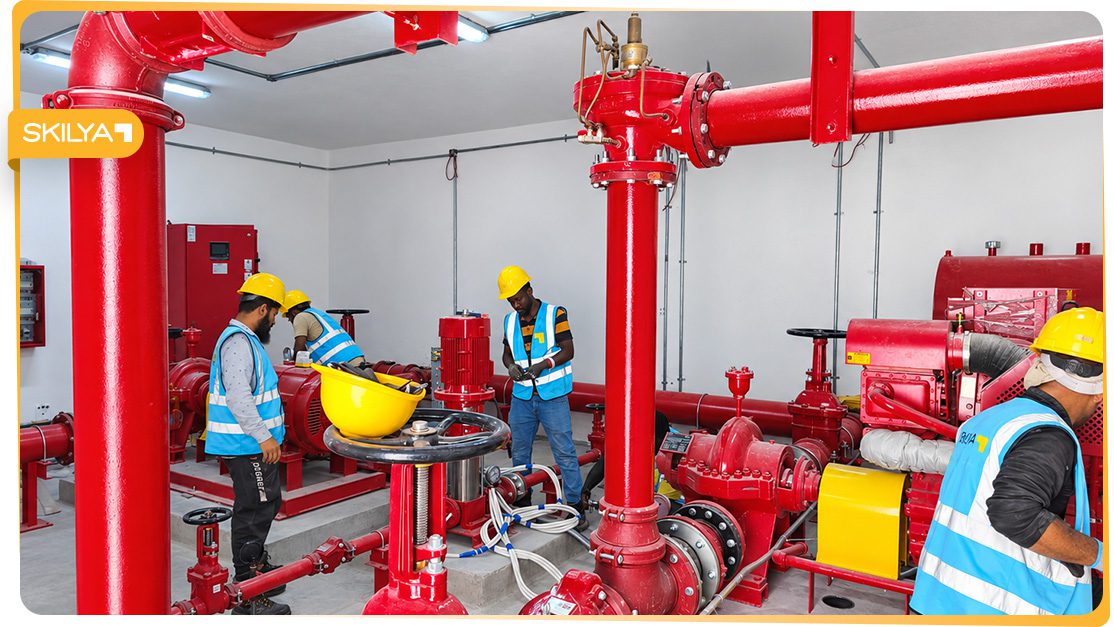
4. Fire Pump Systems
Fire pumps support water delivery to firefighting systems where required by the design.
A fire pump installation may include the specified pumps, controllers, piping connections, valves, monitoring arrangements, and associated equipment.
The system must meet the approved engineering requirements for the relevant installation.
Pump capacities and arrangements should be established through qualified design, rather than selected using generic building size assumptions.
5. Specialized Fire Suppression Systems
Some industrial facilities require specialized suppression systems rather than, or in addition to, conventional water-based protection.
Depending on the hazard, these may include:
- Clean-agent systems.
- Carbon dioxide systems.
- Foam-based suppression.
- Deluge systems.
- Other approved specialized fire protection solutions.
System suitability must be determined by qualified fire protection professionals.
Particular care is required for total-flooding gaseous systems, including occupant safety, enclosure conditions, evacuation arrangements, and interlocks.
A particular agent or suppression method should never be selected simply because it is available from a contractor.
6. Fire Protection Interfaces and Supporting Systems
Fire protection installations may need to interact with other building services.
These interfaces can involve electrical systems, mechanical equipment, ventilation, building controls, and emergency arrangements.
Responsibilities for equipment shutdowns, alarm interfaces, monitoring, and coordinated testing should be defined in the project documents.
Fire Protection Requirements for Different Industrial Facilities
Not every industrial building has the same fire risk.
Logistics and Storage Warehouses
Warehouse protection depends on the commodities stored, packaging, storage heights, rack arrangements, and operational activities.
A logistics warehouse using high-bay pallet racking may have different requirements from a facility storing noncombustible materials at floor level.
Manufacturing Factories
Manufacturing facilities may contain machinery, electrical equipment, production lines, raw materials, and process-specific hazards.
The fire protection strategy should reflect the actual industrial process and approved risk assessment.
Electrical and Equipment Rooms
Certain technical rooms may require dedicated detection or suppression arrangements because of the equipment installed and the applicable design requirements.
Industrial Facilities Handling Hazardous Materials
Facilities containing flammable liquids, combustible substances, or other regulated materials may require additional protective measures.
These projects may also be subject to specialist approval requirements beyond those applicable to ordinary warehouses.
Existing Factory and Warehouse Expansions
Expanding an existing facility can affect fire protection coverage, alarm zones, water demand, evacuation arrangements, and system capacity.
The project team should assess existing infrastructure before connecting additional fire protection equipment.
What to Check Before Hiring Fire Protection Contractors in Saudi Arabia
Selecting an experienced industrial fire protection contractor requires evaluating technical qualifications, relevant experience, and the ability to meet project-specific requirements.
1. Relevant Industrial Project Experience
Review the contractor’s previous work in warehouses, factories, and industrial developments.
Ask whether its experience includes fire alarm installation, firefighting networks, pump systems, sprinkler systems, or specialized suppression systems relevant to your project.
Confirm the contractor’s actual responsibilities on those projects.
2. Required Licensing and Accreditation
Before awarding a fire protection contract, verify the company’s current licenses, approvals, and any accreditation required for the intended activity.
Saudi Civil Defense provides official services for checking accredited safety companies and specialized engineering offices.
Do not assume that general contracting experience automatically establishes authorization for every fire protection activity.
3. Engineering and Design Responsibilities
Clarify who is responsible for fire protection design, engineering calculations, technical submissions, and approvals.
Where the contractor is providing installation only, the project should identify the approved design and the responsible engineering consultant.
Any proposed design changes should follow the required engineering review and approval process.
4. Installation and Quality Control
Review the contractor’s approach to approved materials, installation inspections, workmanship, testing, and documentation.
The required quality assurance procedures should correspond with the approved technical specifications.
5. Testing and Commissioning Capabilities
Fire protection installation must be followed by the applicable inspection and testing activities.
Ask contractors to explain which tests will be included and how they will document the results.
6. Coordination With Other Contractors
Fire protection installations frequently interact with structural steel, ceilings, HVAC, electrical systems, and industrial equipment.
Effective coordination is necessary to manage routing, access, equipment placement, and system interfaces.
7. Maintenance and Handover Support
Confirm whether the quotation includes operating documentation, training, maintenance information, warranties, and any contracted post-handover support.
Maintenance responsibilities should be defined separately from the initial construction scope.
What Your Fire Protection Contractor RFQ Should Include
A complete RFQ helps contractors prepare proposals based on consistent technical requirements.
1. Project Overview
Provide the facility type, project location, building area, clear height, intended use, development stage, and required installation schedule.
2. Occupancy and Hazard Information
Explain the industrial operations or warehouse storage activities.
For warehouses, include available information about stored commodities, packaging, racking layouts, and storage heights.
For factories, identify relevant processes and hazard information.
3. Approved Fire Protection Drawings
Provide available fire alarm, firefighting, sprinkler, pump room, and related system drawings.
State the approval and revision status of the documents.
4. Fire Protection BOQ
Include an itemized Bill of Quantities covering the systems and installation activities to be priced.
5. Technical Specifications
Provide equipment specifications, applicable standards, material requirements, and approved product conditions.
6. Water Supply and Infrastructure
For water-based systems, identify available information concerning the fire water supply, tanks, pumps, piping, and external networks.
7. System Interfaces
Clarify electrical supplies, alarm monitoring, equipment controls, mechanical interfaces, and responsibilities shared with other contractors.
8. Testing and Acceptance Requirements
Define the required inspections, commissioning procedures, witness testing, documentation, and applicable authority-related responsibilities.
9. Construction Schedule
Share equipment procurement deadlines, installation milestones, other trade dependencies, and the required handover date.
10. Commercial Requirements
Specify the quotation format, pricing breakdown, payment terms, exclusions, warranty obligations, and quotation validity period.
Industrial Fire Protection Contractor RFQ Checklist
RFQ Requirement | Information to Provide |
Project Details | Facility type, location, building area, and stage |
Hazard Information | Manufacturing process or stored commodities |
Warehouse Storage | Rack height, layout, commodity type, and storage arrangements |
Design Documents | Fire protection drawings and specifications |
Fire Alarm | Detection, notification, control, and interface requirements |
Firefighting Systems | Sprinklers, hydrants, piping, and valves |
Suppression Systems | Specialized systems specified in the approved design |
Water Infrastructure | Pumps, tanks, and available supply information |
BOQ | Itemized quantities and materials |
Regulatory Requirements | Applicable codes, permits, and approval responsibilities |
Testing | Inspections, commissioning, and acceptance |
Commercial Terms | Pricing, exclusions, warranties, and schedule |
The checklist should reflect the actual project scope. Not every facility requires every system listed above.
Have your approved fire protection drawings or BOQ ready? Contact Skilya to discuss your project requirements.
What Affects Fire Protection Installation Costs in Saudi Arabia?
Fire protection quotation costs depend on the facility’s risks, required systems, equipment specifications, and installation conditions.
Facility Size and Configuration
Building dimensions, ceiling heights, separate operational areas, and structural arrangements influence installation requirements.
Fire Hazard and Storage Classification
Warehouse commodity characteristics, storage heights, and industrial processes can significantly affect the protection strategy.
Fire Protection System Type
Fire alarm systems, sprinkler installations, fire pumps, and specialized suppression systems have different equipment and installation requirements.
Water Supply Requirements
Some developments may require dedicated fire water infrastructure or modifications to existing systems.
Technical Specifications
Equipment ratings, material specifications, approved manufacturers, and system interfaces affect procurement and installation costs.
Site Conditions and Construction Schedule
Restricted working areas, existing operational facilities, installation heights, and construction sequencing may influence the quotation.
Testing, Approval, and Handover Requirements
Specified tests, technical submissions, inspections, and final documentation should be reflected in the commercial proposal.
Because fire protection requirements vary significantly, project owners should request quotations based on the approved design and actual facility risks rather than relying on a general price per square meter.
Common Mistakes When Hiring Fire Protection Contractors
Requesting a Quote Without Confirming Storage Requirements
For warehouses, commodity types, rack configuration, and storage heights can influence the appropriate protection system.
Treating All Industrial Facilities the Same
Different industrial processes create different fire hazards. A system suitable for one facility may not be appropriate for another.
Failing to Verify Required Accreditation
Always verify any licensing or accreditation required for the specific fire protection work before contract award.
Ignoring System Interfaces
Fire alarm, firefighting, electrical, mechanical, and building control systems may require coordinated installation and testing.
Excluding Testing and Handover
The contractor’s responsibilities should not end at physical installation when the agreement requires testing, commissioning, and acceptance documentation.
Comparing Quotations With Different Scopes
A fire alarm-only proposal cannot be compared directly with a quotation including sprinklers, fire pumps, suppression systems, and related infrastructure.
Why Consider Skilya for Industrial Fire Protection in Saudi Arabia?
When evaluating fire protection contractors for warehouses and industrial facilities in Saudi Arabia, project owners should consider relevant construction experience and the ability to coordinate fire protection with the wider building project.
Established in 2016, Skilya Construction Company provides general contracting, MEP, and industrial construction services in Saudi Arabia, with offices in Al-Khobar and Dammam.
Skilya’s published fire protection service offering covers fire alarm systems, firefighting networks, fire pumps, sprinkler systems, suppression equipment, installation, testing, and maintenance-related services.
Integrated Fire Protection and MEP Services
Industrial projects often require coordination between fire protection, electrical works, HVAC, plumbing, structural steel, and other construction disciplines.
Skilya’s wider service offering allows project owners to discuss these interfaces within the overall project scope.
Explore Skilya Fire Protection Services and MEP Services.
Relevant Project: United Stars DG Warehouses
Skilya’s portfolio includes United Stars DG Warehouses in Dammam Second Industrial City.
The project covers approximately 13,700 square meters and identifies Skilya as General Contractor.
Its published scope includes civil construction, structural steel erection, electrical services, plumbing, HVAC, finishing works, and firefighting and fire alarm systems.
This project demonstrates Skilya’s involvement in coordinating fire protection within a large industrial warehouse development.
Relevant Project: Rawabi Electric Factory
Another reference is Rawabi Electric Factory in Dammam Second Industrial City.
The published project information identifies fire alarm systems and describes specialized fire protection installations associated with production areas, including FM-200, CO2, and deluge foam systems.
This provides a relevant example of the different technical systems involved in industrial facility construction.
For a new project, the suitability of particular suppression technologies and the responsibilities of the contractor must be established through approved engineering and contractual documentation.
Confirming Project-Specific Requirements
Skilya’s published services and industrial project references are useful starting points for evaluating its capabilities.
Before appointment, clients should verify the current licensing, accreditation, technical resources, and specific approvals required for their proposed fire protection scope.
Visit the Skilya Projects Portfolio to explore additional industrial developments.
How to Request a Fire Protection Quotation From Skilya
Step 1: Describe Your Facility
Provide the facility location, building type, area, intended use, and relevant storage or manufacturing activities.
Step 2: Share Your Fire Protection Documents
Prepare available approved drawings, technical specifications, BOQ, equipment schedules, and applicable approval information.
Step 3: Define the Required Scope
Clarify whether your inquiry concerns fire alarm installation, sprinkler systems, firefighting infrastructure, specialized suppression, or a combined package.
Step 4: Confirm the Construction Timeline
Provide the intended installation start date, project milestones, and required completion date.
Step 5: Discuss Technical and Commercial Requirements
Contact Skilya to establish whether the project is within its available capabilities and determine any additional information or qualification checks required before quotation.
Request a Fire Protection Quotation in Saudi Arabia
Planning a warehouse, logistics facility, manufacturing plant, or industrial development?
Skilya Construction Company provides fire protection-related services and integrated industrial construction capabilities in Saudi Arabia.
Share your project requirements, fire protection drawings, BOQ, and expected schedule to discuss the appropriate installation scope.
Contact Skilya:
- Email: info@skilya.com
- Phone: +966 13 899 9045
- Services: Fire Protection
- Projects: Skilya Project Portfolio
For confidential documents or large tender packages, contact Skilya first to arrange an appropriate document-sharing method.
Frequently Asked Questions About Industrial Fire Protection Contractors
What do industrial fire protection contractors provide?
Depending on their qualifications and agreed scope, contractors may provide fire alarms, sprinklers, firefighting piping, fire pumps, hydrants, specialized suppression systems, installation, testing, and maintenance services.
What fire protection systems are required for warehouses in Saudi Arabia?
Requirements depend on the building’s occupancy, stored commodities, storage height, layout, hazards, and applicable approved design. The relevant provisions of the Saudi Building Code and responsible authorities must be considered.
How do I select a fire protection contractor in Saudi Arabia?
Review relevant industrial project experience, technical resources, installation and testing procedures, required licensing and accreditation, and the completeness of the technical and commercial proposal.
What documents are needed for a fire protection quotation?
Typical documents include approved fire protection drawings, fire alarm layouts, sprinkler or firefighting designs, technical specifications, BOQ, hazard information, site information, and the project schedule.
How much does warehouse fire protection installation cost?
Costs depend on system type, building dimensions, storage characteristics, water supply requirements, materials, installation conditions, and testing obligations. Project-specific pricing requires the appropriate design documentation.
Do all factories require specialized gas suppression systems?
No. Specialized suppression is determined by the relevant hazards and approved engineering design. Such systems are not automatically appropriate for every manufacturing facility.
Does Skilya have fire protection experience in industrial projects?
Yes. Skilya’s published projects include firefighting and fire alarm systems at United Stars DG Warehouses and fire protection installations at Rawabi Electric Factory.
Is Skilya accredited by Saudi Civil Defense?
Skilya publishes fire protection services, but its current accreditation status for a particular fire protection activity should be verified through the relevant official channels before contract award.
Conclusion
Selecting qualified fire protection contractors in Saudi Arabia is an important part of developing warehouses, factories, and industrial facilities with appropriate safety systems.
Project owners should evaluate actual fire hazards, approved design requirements, contractor qualifications, technical installation capabilities, testing procedures, and commercial scope.
A complete RFQ helps contractors prepare clearer proposals and makes it easier to identify missing activities before appointment.
With published industrial construction experience and fire protection service capabilities, Skilya Construction Company provides a relevant contact point for discussing fire protection construction requirements.
Have an industrial fire protection project ready for quotation? Contact Skilya to share your project requirements and discuss the next steps.