

- seo
- October 31, 2026
Electrical Installation Contractors for Factories in Saudi Arabia
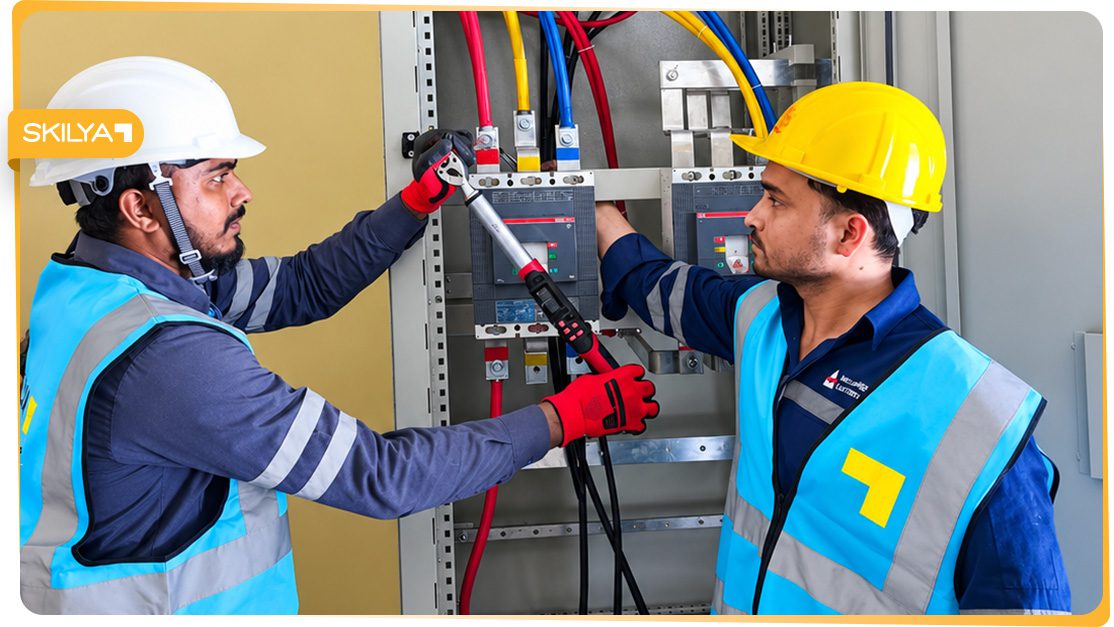
Choosing experienced electrical installation contractors for factories is an essential step in developing a safe, reliable, and operationally efficient manufacturing facility in Saudi Arabia.
Factories depend on electrical infrastructure to operate production machinery, manufacturing lines, HVAC equipment, lighting, automation systems, and supporting utilities. Unlike conventional buildings, industrial facilities may have complex power requirements, continuous operating schedules, large motor loads, and specialized equipment connections.
For factory owners, industrial developers, and procurement managers, selecting the right electrical contractor involves evaluating technical experience, power distribution capabilities, installation quality, safety procedures, and commissioning requirements.
Whether you are constructing a new factory in Dammam, expanding a manufacturing facility in Jubail, or developing an industrial production building in Al-Khobar, defining your electrical installation scope is critical before requesting a quotation.
This guide explains the electrical systems commonly required in factories, what to look for when selecting an industrial electrical contractor, which documents to include in your Request for Quotation (RFQ), and how Skilya Construction Company supports industrial electrical construction projects in Saudi Arabia.
Planning electrical installations for a factory? Contact Skilya to discuss your project requirements and request an electrical installation quotation.
Why Factories Need Specialized Electrical Installation Contractors
Industrial electrical installations are designed to support manufacturing equipment, operational processes, and building infrastructure.
Factory electrical requirements often differ from those of conventional commercial buildings because of high equipment loads, motor-driven machinery, specialized control systems, and operational continuity requirements.
Industrial Power Requirements
Factories may require significant electrical capacity to operate production lines, machinery, cooling equipment, compressed-air systems, and supporting infrastructure.
The electrical design must consider connected loads, demand calculations, distribution requirements, and appropriate protection systems.
Machinery and Production Equipment
Manufacturing equipment may involve motors, drives, control panels, and dedicated electrical connections.
The contractor must coordinate installation requirements with approved engineering drawings and equipment manufacturer specifications.
Operational Reliability
Electrical faults can interrupt manufacturing activities and affect production schedules.
Appropriate installation methods, inspection procedures, testing, and maintenance access help support reliable facility operations.
Industrial Safety
Factory electrical systems must address hazards associated with electrical equipment, fault currents, earthing, equipment isolation, and the surrounding industrial environment.
Electrical work must be carried out by suitably qualified personnel following applicable safety requirements.
Coordination With Other Construction Systems
Electrical installations interact with machinery, HVAC equipment, fire protection systems, mechanical utilities, and structural construction.
A contractor must understand these interfaces to prevent installation conflicts.
Electrical Installation Services Required for Factory Construction
The electrical scope depends on the facility’s manufacturing activities, equipment requirements, and approved design.
1. Main Electrical Distribution Systems
Power distribution is a core part of factory electrical infrastructure.
The installation may include:
- Main distribution boards.
- Sub-distribution boards.
- Power cables and feeders.
- Circuit protection equipment.
- Distribution transformers where included.
- Cable containment systems.
- Equipment connection points.
The design must account for the required electrical loads and applicable protection and coordination requirements.
For projects involving medium-voltage systems or utility connections, the scope should clearly identify the responsible qualified parties and approval requirements.
2. Motor Control Centers and Industrial Equipment Connections
Factories frequently use electric motors to operate production machinery, pumps, fans, compressors, and material-handling systems.
Depending on the design, electrical work may include:
- Motor Control Centers (MCCs).
- Motor feeders.
- Variable Frequency Drives (VFDs).
- Motor protection devices.
- Local isolators.
- Equipment power cables.
- Control wiring and interfaces.
The contractor should coordinate these installations with equipment suppliers and the approved electrical design.
Manufacturing machine programming and process automation should not be assumed to be included unless explicitly stated in the contract.
3. Factory Lighting Installation
Industrial lighting must provide suitable illumination for production, storage, inspection, access, and maintenance areas.
Lighting installations may include:
- High-bay industrial lighting.
- Production area lighting.
- Warehouse lighting.
- Administrative lighting.
- External lighting.
- Emergency and exit lighting.
- Lighting controls.
The lighting design should consider the activities performed in each area and the applicable project requirements.
4. Cable Trays, Conduits, and Electrical Containment
Factories often contain extensive cable distribution networks.
Electrical installation may require cable trays, cable ladders, conduits, trunking, and other containment systems.
These installations must be coordinated with structural steel, HVAC ducts, piping, and mechanical equipment.
Cable routing and segregation should follow the approved design and applicable technical requirements.
5. Earthing and Bonding Systems
Earthing and bonding are essential components of electrical safety.
The required installation may include grounding conductors, bonding connections, earth electrodes, and associated testing arrangements.
These systems must be installed and verified according to the approved engineering design and applicable standards.
Additional lightning protection may be required depending on the building’s risk assessment and project specifications.
6. Low-Current and Building Control Systems
Industrial facilities may require additional low-current infrastructure.
Depending on the project, this can involve:
- Fire alarm systems.
- Building Management Systems (BMS).
- CCTV.
- Access control.
- Data and communication cabling.
- Monitoring interfaces.
The contractor’s responsibility for each system should be clearly defined.
7. Backup Power and Critical Loads
Some manufacturing operations require backup power or other electrical continuity arrangements.
The appropriate solution depends on the critical loads, operational needs, and approved electrical design.
Where included, the installation scope may cover generators, transfer equipment, UPS systems, or associated electrical infrastructure.
These systems should not be treated as automatically included in a standard factory electrical quotation.
8. Electrical Testing and Commissioning
Electrical installations require inspection, testing, and verification before being placed into service.
Depending on the system and approved testing procedures, activities may include:
- Cable continuity testing.
- Insulation resistance testing.
- Earthing verification.
- Protective device checks.
- Panel inspection.
- Functional testing.
- Equipment interface checks.
- Relevant commissioning documentation.
Testing should be completed by competent personnel using appropriate procedures and equipment.
What to Look for in Electrical Installation Contractors for Factories
Choosing the right industrial electrical contractor in Saudi Arabia requires evaluating technical capabilities and relevant project experience.
Experience With Industrial Electrical Projects
Review the contractor’s previous work involving factories, warehouses, manufacturing facilities, and other industrial buildings.
Ask about the systems installed and the contractor’s specific responsibilities.
Experience with conventional building lighting alone may not demonstrate capability for complex industrial power distribution and machinery interfaces.
Knowledge of Factory Power Distribution
A suitable contractor should understand industrial electrical distribution, equipment installation requirements, cable routing, protection systems, and commissioning procedures.
The contractor’s team should be able to interpret approved drawings and identify technical clarifications before installation.
Engineering Coordination
Factory electrical systems require coordination with mechanical and structural construction.
Check how the contractor manages technical submittals, shop drawings, equipment layouts, and electrical interfaces.
Design and engineering responsibilities should be clearly assigned between the contractor, consultant, and other relevant parties.
Qualified Electrical Personnel
Electrical installations should be performed and supervised by competent personnel with qualifications appropriate to the work.
Project owners should confirm that the contractor has suitable supervision, testing capabilities, and safety procedures for the proposed scope.
Safety and Quality Control
Review the contractor’s approach to:
- Electrical isolation and safe work procedures.
- Installation inspections.
- Material approvals.
- Equipment handling.
- Cable and panel testing.
- Quality documentation.
- Testing and commissioning.
Project Management and Scheduling
Electrical works must be coordinated with civil construction, machinery installation, MEP activities, and utility readiness.
The contractor should explain how it plans to manage procurement, installation milestones, technical inspections, and commissioning interfaces.
What Should a Factory Electrical Installation RFQ Include?
An effective Request for Quotation provides sufficient information for contractors to prepare comparable technical and commercial proposals.
1. Factory Project Overview
Start by identifying:
- Project name.
- Factory location.
- Manufacturing activity.
- Approximate building area.
- Current construction stage.
- Expected installation start date.
- Target completion date.
Explain whether the electrical scope relates to a new factory, an existing facility expansion, or a specific industrial installation package.
2. Electrical Engineering Drawings
Provide available documents such as:
- Electrical layouts.
- Single-line diagrams.
- Power distribution drawings.
- Lighting layouts.
- Cable routing drawings.
- Earthing layouts.
- Equipment connection schedules.
- Relevant panel and control diagrams.
Identify each drawing’s revision and approval status.
3. Electrical Load Requirements
The RFQ should include available information about:
- Connected electrical loads.
- Estimated maximum demand.
- Machinery and motor loads.
- Electrical supply requirements.
- Equipment starting characteristics.
- Critical loads.
- Planned future expansion allowances.
Load calculations and system design should be prepared or reviewed by appropriately qualified electrical engineers.
4. Electrical Equipment and Material Specifications
Provide the required technical specifications for panels, cables, containment, protection equipment, and other installation materials.
The RFQ should clarify whether approved manufacturers, product standards, or permitted alternatives apply.
5. Bill of Quantities
An Electrical BOQ helps organize pricing for:
- Distribution boards.
- Cables.
- Cable trays and conduits.
- Lighting fixtures.
- Switches and power outlets.
- Earthing systems.
- Equipment connections.
- Controls and accessories.
- Testing and commissioning.
Quantities should be aligned with the drawings and technical specifications where possible.
6. Machinery and Equipment Interfaces
Explain which production equipment will be installed and who is responsible for its electrical connection.
Specify whether the contractor’s scope includes final connection, motor feeders, isolators, control wiring, or other interfaces.
Clarify the responsibilities of machine manufacturers and specialist installers.
7. Utility and Authority Requirements
Identify the available power supply information, connection requirements, and any known project-specific approvals.
Requirements for utility connections, medium-voltage work, and specialist installations should be confirmed with the responsible authorities and qualified professionals.
8. Installation Schedule
Provide the planned construction milestones, machinery delivery dates, electrical energization dependencies, and expected handover.
Factory projects often require electrical work to be completed in coordination with equipment installation and commissioning.
9. Testing and Handover Requirements
Define the required inspection and test procedures, acceptance criteria, documentation, and responsibilities for commissioning.
10. Commercial Requirements
The RFQ should specify pricing format, material supply responsibilities, payment terms, quotation validity, warranties, project schedule, and exclusions.
Factory Electrical Installation RFQ Checklist
RFQ Requirement | Information to Provide |
Project Information | Factory type, location, size, and project stage |
Electrical Drawings | Layouts, SLDs, cable routing, and panel schedules |
Electrical Load Schedule | Building loads, machinery loads, and demand information |
Equipment Requirements | MCCs, VFDs, panels, and connections where applicable |
Electrical BOQ | Items, quantities, and pricing format |
Material Specifications | Approved cables, panels, containment, and accessories |
Earthing and Protection | Engineering specifications and testing requirements |
Machinery Interfaces | Responsibilities for equipment power and controls |
Utility Interfaces | Supply information and relevant approvals |
Installation Schedule | Construction and machinery milestones |
Commissioning | Inspections, testing, and handover documentation |
Commercial Terms | Inclusions, exclusions, warranties, and payment terms |
A complete RFQ helps contractors understand the installation requirements and reduces uncertainty during quotation evaluation.
Have your electrical drawings, load schedule, or BOQ ready? Contact Skilya to discuss your factory electrical installation project and request a quotation.
What Affects Factory Electrical Installation Costs in Saudi Arabia?
Electrical installation costs depend on project-specific technical requirements.
Electrical Load and Distribution Capacity
The facility’s electrical demand influences the required distribution systems, cables, panels, and other electrical infrastructure.
Factory Machinery Requirements
Production equipment may require dedicated feeders, motor controls, specialized connections, or additional protection systems.
Cable Quantities and Installation Routes
Cable length, routing complexity, containment systems, installation access, and material specifications influence project costs.
Industrial Lighting Requirements
Lighting equipment, installation heights, controls, emergency lighting, and the number of operational areas affect the scope.
Controls and Low-Current Systems
BMS, fire alarm, communication, and monitoring systems can increase installation complexity where included.
Testing and Commissioning
Inspection and commissioning requirements should be incorporated into the quotation.
Existing Site Conditions
Installing electrical systems inside an operating factory may require restricted work windows, isolations, access controls, and additional coordination.
For these reasons, the most useful quotation is based on approved project information rather than a generic rate per square meter.
Common Mistakes When Hiring Factory Electrical Contractors
Requesting Prices Without an Electrical Load Schedule
Without reliable information about industrial equipment and electrical demand, contractors may be unable to price the required system accurately.
Ignoring Machinery Interfaces
Power supply to a machine does not necessarily include machine controls, programming, specialist wiring, or process commissioning.
These boundaries must be defined.
Leaving Testing and Commissioning Outside the Scope
Electrical installation should include the applicable testing and verification requirements before systems are accepted.
Comparing Quotations With Different Material Specifications
Contractors may quote different panel brands, cable types, protection devices, or installation accessories.
All proposals should be checked for technical compliance.
Failing to Plan Future Expansion
Where future production capacity is anticipated, the electrical design should consider whether reasonable expansion allowances are appropriate.
Selecting a Contractor Based Only on Price
Lower quotations may omit materials, equipment interfaces, testing, or other essential activities.
Project owners should compare complete technical and commercial proposals.
Why Choose Skilya for Factory Electrical Installation in Saudi Arabia?
When evaluating electrical installation contractors for factories, project owners should consider relevant industrial construction experience, electrical contracting capabilities, and coordination with wider MEP and building works.
Established in 2016, Skilya Construction Company provides general contracting and MEP services in Saudi Arabia, with offices in Al-Khobar and Dammam.
Skilya’s published service offering includes electrical contracting for industrial and commercial projects, together with plumbing, HVAC, fire systems, structural construction, and infrastructure.
Industrial Electrical Contracting Capabilities
Skilya’s electrical service descriptions address:
- Power distribution installations.
- Electrical panels and circuits.
- Industrial lighting.
- Electrical cable routing and containment.
- Equipment connections.
- Earthing and electrical protection.
- Electrical installation inspections and testing.
- Coordination with other construction disciplines.
The company also identifies itself on its electrical service page as a registered participant in Saudi Electricity Company’s electrical contractor register.
The precise registration status, classifications, and authorization requirements relevant to a proposed project should be verified before contract award.
Explore Skilya Electrical Contracting Services and MEP Services.
Rawabi Electric Factory: Relevant Industrial Project Experience
A particularly relevant project is Rawabi Electric Factory in Dammam Second Industrial City.
Skilya’s published project information identifies the company as General Contractor.
The project’s technical systems include:
- Power distribution network.
- Indoor and outdoor lighting.
- Building Management System (BMS).
- Fire alarm and CCTV.
- Plumbing and drainage infrastructure.
- Fire protection systems.
- Chilled-water HVAC.
- Compressed-air utilities.
This project demonstrates experience coordinating electrical infrastructure with mechanical, safety, and utility systems in an industrial development.
Electrical Works Within Integrated Construction Projects
Skilya’s experience also includes United Stars DG Warehouses in Dammam Second Industrial City, where electrical services formed part of the published general contracting scope.
For factory owners developing complete industrial facilities, coordination between electrical works, civil construction, structural steel, MEP, and infrastructure is an important consideration.
Explore further examples in the Skilya Projects Portfolio.
How to Request a Factory Electrical Installation Quotation From Skilya
Step 1: Describe Your Project
Share the factory location, manufacturing activity, building area, and project stage.
Step 2: Submit Available Electrical Documents
Prepare electrical drawings, single-line diagrams, load schedules, equipment schedules, and BOQ documents.
Step 3: Define the Installation Scope
Explain whether you require complete factory electrical installations or a specific package such as power distribution, lighting, or equipment connections.
Step 4: Clarify Machinery and Utility Requirements
Identify production equipment requirements and any known electrical supply or connection responsibilities.
Step 5: Share the Project Timeline
Communicate the expected installation period, machinery delivery milestones, and completion targets.
Step 6: Request a Quotation
Contact Skilya to discuss the proposed scope and determine the technical information needed for reviewing your inquiry.
Request an Electrical Installation Quotation for Your Factory
Planning electrical works for a manufacturing plant, industrial warehouse, factory expansion, or new production facility in Saudi Arabia?
Skilya Construction Company provides electrical and multidisciplinary construction capabilities for industrial developments.
Share your electrical drawings, BOQ, equipment requirements, and project schedule to discuss a quotation.
Contact Skilya:
- Email: info@skilya.com
- Phone: +966 13 899 9045
- Electrical Services: Explore Skilya Electrical Contracting
- Project Portfolio: View Skilya Projects
For confidential technical documents, contact Skilya first to arrange an appropriate submission method.
Frequently Asked Questions About Electrical Installation Contractors for Factories
What do factory electrical installation contractors do?
Factory electrical contractors install electrical distribution systems, cables, panels, lighting, earthing arrangements, equipment connections, and other electrical infrastructure according to the agreed project scope.
How do I select an industrial electrical contractor in Saudi Arabia?
Evaluate relevant factory experience, technical capabilities, competent personnel, safety procedures, installation quality, testing requirements, and commercial transparency.
What documents are required for a factory electrical quotation?
Typical documents include electrical drawings, single-line diagrams, load schedules, equipment specifications, electrical BOQ, site information, and the required installation timeline.
Does factory electrical installation include MCCs and VFDs?
These systems may be included where required by the project design. The contractor’s responsibility for equipment supply, installation, wiring, controls, and commissioning should be clearly stated.
How much does factory electrical installation cost in Saudi Arabia?
Costs depend on electrical load, distribution capacity, equipment requirements, cable quantities, installation complexity, material specifications, and commissioning requirements. A project-specific quotation is necessary for reliable pricing.
Can electrical installation take place in an operating factory?
Some activities can take place while production continues, provided that suitable safety controls, isolation arrangements, access procedures, and operational coordination are established. Certain work may require planned shutdowns.
Does Skilya provide industrial electrical installation services?
Yes. Skilya publishes electrical contracting as part of its service offering and lists electrical infrastructure among the systems delivered within its industrial projects.
Can Skilya review electrical drawings and a BOQ for a new factory?
Project owners can contact Skilya with their electrical documentation and project requirements to discuss technical suitability and the next steps for preparing a quotation.
Conclusion
Choosing qualified electrical installation contractors for factories in Saudi Arabia is essential for developing industrial facilities with appropriate power distribution, machinery connections, lighting, protection systems, and operational infrastructure.
A successful factory electrical installation requires accurate engineering documentation, qualified execution, technical coordination, quality inspections, and appropriate commissioning procedures.
Before selecting a contractor, prepare your electrical drawings, load schedules, equipment information, BOQ, and project timeline.
With experience in industrial construction and electrical contracting, Skilya Construction Company offers relevant capabilities for factory electrical installation projects in Saudi Arabia.
Ready to discuss your factory electrical requirements? Contact Skilya to share your project scope and request a quotation.