

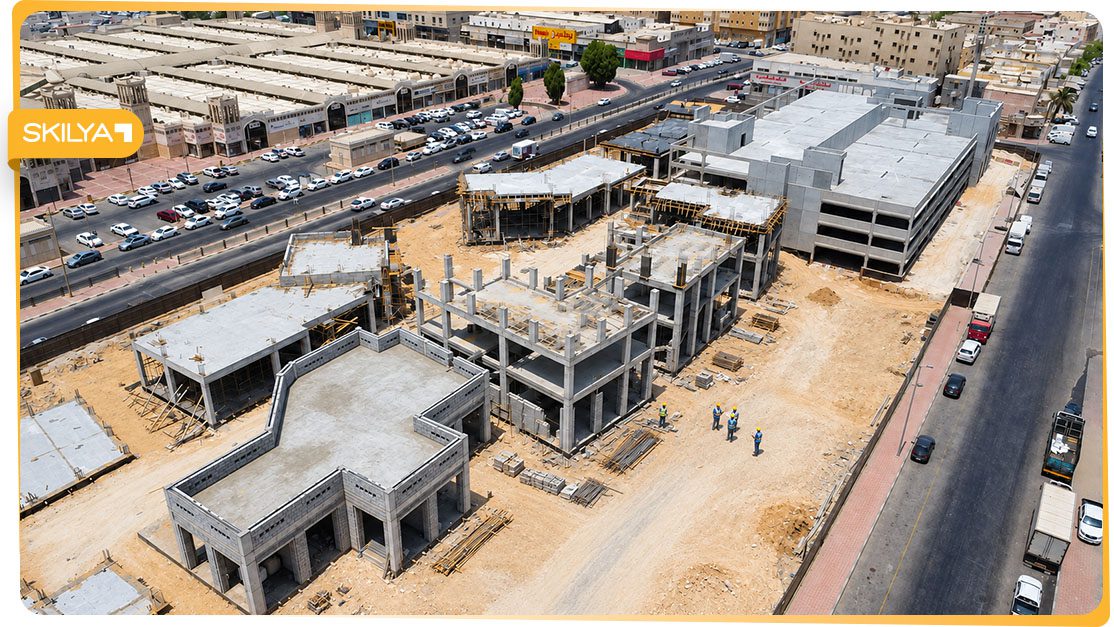
Skilya General Contracting Services in Saudi Arabia
Construction projects rarely succeed through individual trades working independently. A building may require civil construction, structural systems, mechanical and electrical installations, plumbing, infrastructure, finishing works, specialist subcontractors, procurement, inspections, quality management, and hundreds of decisions that need to happen in the correct sequence.
The role of a general contractor is to bring these activities together.
Skilya General Contracting Services in Saudi Arabia provide an integrated approach to construction project delivery, connecting planning, technical coordination, site execution, subcontractor management, structural works, MEP systems, infrastructure, finishing, quality control, and final project handover.
For industrial, commercial, educational, residential, warehouse, and other construction environments, this coordinated model helps project owners manage complexity through a clearer project structure and a central point of responsibility.
What Are General Contracting Services?
General contracting covers the management and execution of multiple construction activities required to transform project information into a completed facility.
Rather than focusing on one specialized trade, the general contractor coordinates the wider construction process.
Depending on the scope of the project, this can include:
Project planning
Construction scheduling
Site mobilization
Civil construction
Structural works
Structural steel
MEP coordination
Infrastructure
Procurement
Material management
Subcontractor management
Quality control
Safety coordination
Finishing works
Testing and commissioning
Project closeout
Final handover
The general contractor therefore acts as the connection between multiple technical disciplines.
This role becomes increasingly important as construction projects become larger and more specialized.
Why General Contracting Is About Coordination
It is easy to think of general contracting as simply managing construction labor.
In reality, some of the most important responsibilities happen between individual construction activities.
Consider a typical building project.
Concrete foundations may need to support structural steel.
Structural elements can influence HVAC and electrical routes.
MEP services need to be installed before certain ceilings or walls are completed.
Infrastructure systems need to connect the building with external utility networks.
Finishing activities depend on earlier technical work being inspected and completed correctly.
A problem in one area can affect several later activities.
Effective general contracting therefore focuses heavily on coordination.
The objective is to ensure that each construction package supports the complete project rather than working independently.
The General Contractor as a Single Point of Coordination
One important advantage of a general contracting model is having a central party responsible for coordinating construction execution.
Without this structure, the project owner may need to manage several separate contractors directly.
This can create challenges around:
Scope boundaries
Communication
Construction sequencing
Responsibility
Site access
Technical interfaces
Schedule management
A general contractor provides a clearer coordination structure.
Specialist contractors and suppliers may still perform different packages, but their work can be managed within one overall construction strategy.
This helps reduce gaps between disciplines.
Skilya’s Integrated General Contracting Approach
Skilya General Contracting Services are supported by capabilities across several construction disciplines.
These include:
Construction
Structural steel
MEP
Infrastructure
Finishing works
Interior design
Steel fabrication
Project management
This multidisciplinary capability allows Skilya to consider how different packages interact during construction.
For example, a structural steel package can be coordinated with civil foundations.
MEP systems can be reviewed alongside structural and architectural elements.
Infrastructure can be planned around building access and utilities.
Finishing requirements can be considered before technical installations are concealed.
This integrated approach supports a more connected project delivery process.
General Contracting From Planning to Handover
A general contractor’s role extends across multiple phases of the project.
Successful construction delivery requires continuity between these phases.
Stage 1: Understanding the Project Scope
The process begins by understanding what the client wants to build.
This may involve reviewing:
Project objectives
Building function
Drawings
Specifications
Site conditions
Construction requirements
Budget expectations
Target schedule
Clear scope definition helps reduce uncertainty later.
If responsibilities or technical requirements remain unclear, they can create changes or delays once construction begins.
Stage 2: Site Assessment
Every construction site has its own conditions.
General contractors need to understand factors such as:
Site access
Existing utilities
Ground conditions
Material storage areas
Equipment access
Neighboring developments
Temporary facilities
Construction logistics
These conditions can influence construction methods and scheduling.
For example, restricted access may change how materials are delivered.
Limited space may affect crane positions or material storage.
Site assessment allows these constraints to be considered during planning.
Stage 3: Technical Coordination
Construction drawings often come from several engineering disciplines.
A project may have architectural, structural, electrical, mechanical, plumbing, fire protection, and infrastructure drawings.
These documents cannot be treated independently.
An architectural ceiling may need to accommodate lighting, ducts, fire sprinklers, and access panels.
Structural beams may influence mechanical routes.
Drainage depends on levels established by architectural and civil design.
General contracting requires these technical interfaces to be coordinated before they create problems during installation.
Stage 4: Cost and Quantity Planning
Construction budgets depend on accurate understanding of the project scope.
Bill of Quantities information, drawings, specifications, materials, equipment, subcontractor packages, and project duration can all affect cost.
Cost management should continue throughout the project.
Potential changes can arise from:
Client modifications
Design revisions
Quantity changes
Material changes
Site conditions
Additional requirements
A general contractor needs to monitor how these decisions affect the wider project budget.
Stage 5: Construction Scheduling
A construction schedule organizes when work should happen.
However, effective scheduling involves more than assigning dates.
Activities have technical dependencies.
Foundations need to be ready before structural systems can proceed.
Certain structural work needs to finish before roofing or building-envelope activities begin.
MEP rough-ins may need to happen before walls and ceilings close.
Testing should take place before final handover.
The general contractor coordinates these dependencies and monitors whether actual progress follows the project plan.
Stage 6: Procurement
Construction cannot continue without the correct materials and equipment.
Procurement planning may involve:
Structural materials
MEP equipment
Electrical systems
HVAC equipment
Fire protection systems
Finishing materials
Doors
Roofing
Specialized products
Some items may have longer production or delivery times than others.
General contracting therefore requires procurement schedules to remain connected with construction schedules.
A late material can delay several activities that depend on it.
Stage 7: Site Mobilization
Before major construction begins, the site needs to be organized.
Mobilization can involve:
Temporary offices
Site fencing
Storage areas
Temporary utilities
Worker facilities
Access controls
Safety arrangements
Equipment positioning
Internal site routes
Good mobilization helps create a more efficient construction environment.
Poor site organization can reduce productivity throughout the project.
Stage 8: Construction Execution
During execution, the general contractor needs to coordinate daily site activities.
This can include:
Labor
Equipment
Materials
Subcontractors
Inspections
Technical information
Deliveries
Work areas
Safety
Progress reporting
Several teams may be working simultaneously.
The contractor needs to ensure that one team’s work does not prevent another from completing its responsibilities.
Managing Subcontractors
Modern construction projects frequently rely on specialist subcontractors.
These may include teams responsible for:
Concrete works
Structural steel
Electrical systems
Plumbing
HVAC
Fire protection
Finishing
Roads
Landscaping
Cladding
The general contractor coordinates these packages within the overall project.
Important responsibilities can include:
Scope definition
Schedule coordination
Site access
Quality monitoring
Safety requirements
Drawing distribution
Inspection coordination
Progress tracking
Clear subcontractor management reduces both overlaps and gaps in project responsibility.
General Contracting and Structural Steel
Structural steel frequently requires coordination across several construction activities.
Steel columns depend on foundation and anchor-bolt accuracy.
Structural members can influence MEP routes.
Roofing systems connect directly with steel structures.
Steel delivery and erection require access, cranes, and logistical planning.
A general contractor therefore needs to coordinate structural steel with both earlier and later construction stages.
Skilya’s structural steel and fabrication capabilities can support this relationship within wider project delivery.
General Contracting and MEP Systems
MEP is one of the most coordination-intensive areas of modern construction.
Mechanical, electrical, plumbing, and fire systems often share the same physical spaces.
Services may pass through:
Ceilings
Shafts
Technical rooms
Roof spaces
Walls
Structural zones
Late coordination can create clashes and expensive rework.
General contracting helps connect the MEP package with architectural and structural requirements before installation progresses too far.
General Contracting and Infrastructure
Building construction is often connected with substantial external work.
Projects may require:
Earthworks
Roads
Drainage
Water networks
External utilities
Parking
Landscaping
Site development
Infrastructure activities influence how the building connects with the wider property.
They can also affect construction logistics.
Road access, site levels, and utility routes may need to be established at specific stages of the project.
Coordinating building and infrastructure work within one wider schedule can improve project flow.
General Contracting and Finishing Works
Finishing represents one of the most visible stages of construction.
However, final quality depends on the activities completed before finishing begins.
Painting depends on surface preparation.
Flooring depends on correct levels.
Ceilings depend on MEP coordination.
Doors depend on accurate openings.
Tiles depend on substrates and waterproofing.
The general contractor therefore needs to ensure earlier construction packages are ready before finishing teams begin.
This helps reduce rework and protects final quality.
General Contracting for Industrial Projects
Industrial projects frequently involve complex technical requirements.
Factories and production facilities may contain:
Manufacturing equipment
Structural steel
Heavy electrical systems
Specialized utilities
Warehouses
Loading areas
Ventilation
Fire protection
Production lines
The general contractor needs to coordinate conventional construction with the operational requirements of the facility.
This can require closer communication between construction teams, equipment suppliers, engineers, and the client.
General Contracting for Warehouses and Logistics Facilities
Warehouse projects have their own priorities.
The building may need to support:
Racking systems
Forklifts
Loading docks
Truck yards
Fire protection
Industrial flooring
Clear-span structures
Storage systems
External infrastructure also plays an important role because logistics facilities rely heavily on vehicle circulation.
General contracting helps connect the warehouse structure with loading areas, roads, MEP systems, fire networks, and operational requirements.
General Contracting for Commercial Projects
Commercial construction requires coordination between engineering requirements and the needs of future users.
Projects may include:
Offices
Administrative buildings
Showrooms
Commercial facilities
Retail spaces
MEP performance, interior finishing, façades, accessibility, circulation, and building appearance can all influence project success.
The general contractor needs to coordinate these elements while maintaining control over schedule and construction quality.
General Contracting for Educational and Residential Projects
Educational and residential projects introduce additional user-focused requirements.
Educational facilities may need classrooms, laboratories, administrative areas, circulation zones, outdoor spaces, and technology infrastructure.
Residential projects need to prioritize comfort, privacy, waterproofing, MEP reliability, finishing quality, and long-term maintainability.
An effective general contractor adapts project execution according to the building’s intended use rather than applying one construction strategy to every sector.
Construction Quality Management
Quality control needs to happen throughout construction.
General contractors can coordinate inspections covering areas such as:
Structural works
Materials
Concrete
Steel
MEP installations
Waterproofing
Roofing
Infrastructure
Finishing
The best time to identify a defect is usually before subsequent work covers it.
For example, a plumbing installation should be inspected before walls or floors make access difficult.
Continuous quality management helps prevent defects from becoming larger problems later.
Construction Safety Coordination
General contractors also coordinate safety across multiple construction teams.
Construction sites can include:
Heavy equipment
Excavation
Lifting operations
Electrical work
Working at height
Temporary structures
Vehicles
Multiple subcontractors
These activities need to operate within a coordinated site environment.
Safety requirements should therefore be integrated into daily construction planning and supervision.
Progress Monitoring and Reporting
Project owners need visibility over construction progress.
General contracting management can include tracking:
Completed work
Current activities
Planned work
Procurement
Material deliveries
Technical approvals
Inspections
Project risks
Delays
Corrective actions
Accurate reporting helps teams make decisions before problems grow.
It also improves communication between the client, contractor, consultant, and other stakeholders.
Testing and Commissioning
Construction is not complete simply because all equipment has been installed.
Building systems need to demonstrate that they operate correctly.
Depending on project scope, testing may cover:
Electrical systems
HVAC
Plumbing
Fire protection
Equipment
Other building services
Commissioning helps move the project from construction status toward operational readiness.
Project Closeout
As construction approaches completion, the general contractor needs to organize project closeout.
This can involve:
Final inspections
Snagging
Corrective work
Testing records
As-built drawings
O&M manuals
Warranties
Final documentation
Closeout should ideally be prepared progressively throughout the project rather than left entirely to the final weeks.
Final Project Handover
Handover transfers the completed facility to the client.
A successful handover can include:
Completed construction
Closed snag lists
Tested systems
Project documentation
As-built information
Operation manuals
Warranties
Client training where required
The general contractor remains responsible for coordinating these final activities and helping ensure the facility is ready for operation.
Why Integrated General Contracting Matters
Managing several contractors independently can create complexity for project owners.
An integrated general contracting model provides a centralized structure for construction execution.
Potential advantages include:
Clearer Coordination
Different construction packages operate within one wider project plan.
Better Schedule Management
Dependencies between activities can be managed centrally.
Improved Technical Integration
Structural, architectural, MEP, and infrastructure requirements can be reviewed together.
More Consistent Quality Control
Inspection and construction standards can be coordinated across multiple trades.
Simpler Communication
The client has a clear central point for construction execution.
Better Visibility Over Project Risk
Problems can be assessed in relation to their effect on the complete project.
Skilya General Contracting Services
Skilya General Contracting Services combine multidisciplinary construction capabilities with project coordination from planning through execution and handover.
The company’s wider capabilities include construction, structural steel, MEP, infrastructure, finishing works, interior design, and steel fabrication.
This allows Skilya to approach construction from a broader project perspective.
Rather than viewing civil, structural, MEP, and finishing work as disconnected activities, the general contracting process connects them within one construction strategy.
This approach is particularly valuable for industrial facilities, warehouses, commercial buildings, educational facilities, residential developments, and other technically complex projects.
General Contracting Experience Across Different Project Types
Construction experience becomes more valuable when it spans different project environments.
Industrial projects teach teams how to coordinate construction with operational equipment and specialized systems.
Warehouses require understanding of logistics and structural efficiency.
Commercial projects balance technical systems with architectural and business requirements.
Educational and residential facilities introduce different priorities related to users, comfort, durability, and long-term building performance.
Skilya’s multidisciplinary project portfolio allows its general contracting approach to adapt according to the requirements of each development.
Skilya as a General Contracting Partner in Saudi Arabia
Choosing a general contractor is ultimately about selecting the company that will coordinate a significant part of the construction process.
The contractor needs to understand the project technically while also managing people, materials, equipment, schedules, subcontractors, quality, and communication.
Skilya General Contracting Services in Saudi Arabia are structured around this integrated responsibility.
From early project coordination through site execution and final handover, Skilya brings together the disciplines required to move construction projects from drawings into completed facilities.
Clients can explore Skilya’s wider construction capabilities, general contracting service page, and project portfolio to understand how the company’s multidisciplinary approach supports industrial, commercial, educational, residential, warehouse, and infrastructure projects.
Frequently Asked Questions
What services does Skilya provide as a general contractor?
Skilya’s general contracting capabilities can coordinate construction, structural steel, MEP, infrastructure, finishing works, specialist subcontractors, quality control, project management, closeout, and handover according to project scope.
What is the role of a general contractor?
A general contractor manages and coordinates construction execution, including subcontractors, schedules, materials, technical interfaces, site activities, quality requirements, and project completion.
What is the difference between a general contractor and a specialized contractor?
A specialized contractor normally focuses on one trade, such as electrical, HVAC, steel, or finishing. A general contractor coordinates multiple trades and construction packages within the complete project.
Does Skilya provide general contracting services for industrial projects?
Yes. Skilya’s capabilities include industrial construction environments such as factories, warehouses, structural steel projects, and facilities requiring multidisciplinary construction coordination.
Can general contracting include MEP work?
Yes. MEP coordination is an important part of many general contracting projects because electrical, plumbing, HVAC, and fire systems need to integrate with structural and architectural construction.
What happens during construction project handover?
Handover typically includes final inspections, closing outstanding items, testing systems, preparing project documentation, as-built information, warranties, and transferring the completed facility to the client.
Why is integrated general contracting useful?
Integrated general contracting provides one coordinated framework for multiple construction disciplines, helping improve communication, sequencing, technical coordination, quality control, and project visibility.
Does Skilya manage projects from planning to completion?
Skilya’s project process covers early scope review and planning, cost and technical evaluation, construction execution, ongoing project management, project closeout, and final handover according to the requirements of each project.