

- seo
- June 23, 2026
How to Build a Factory That Supports Long-Term Operations
Factory construction is not only about building a large industrial structure. A successful factory is a long-term operational asset that must support production, storage, machinery, workers, logistics, safety, maintenance, and future expansion. If the factory is not planned and constructed correctly from the beginning, the business may face problems that affect daily operations for years.
A factory must be designed around how the business works. It should support the movement of raw materials, production flow, finished goods storage, truck access, machinery installation, staff movement, utility systems, safety requirements, and maintenance access. A factory that is poorly planned may create bottlenecks, wasted space, weak ventilation, high energy use, repeated maintenance problems, or difficulty expanding in the future.
In Saudi Arabia, factory construction requires careful attention to industrial zone requirements, authority approvals, fire protection standards, MEP systems, structural design, climate conditions, site logistics, and contractor capabilities. Business owners and investors should work with a construction company that understands both industrial construction and long-term operational performance.
Start with a Clear Operational Plan
The first step in factory construction is understanding how the factory will operate. Before focusing on the building itself, the project owner should define the business process, production stages, machinery requirements, storage needs, staff requirements, utility needs, and logistics flow.
A factory layout should be designed around real operations. Where will raw materials enter? Where will they be stored? How will they move to the production area? Where will finished products be packed and stored? How will trucks access loading and unloading areas? Where will machinery be installed? Where will workers enter and move inside the facility?
These questions help shape the building design. If the operational plan is unclear, the factory may be built in a way that looks acceptable but does not support production efficiency. This can lead to unnecessary movement, wasted time, safety risks, and limited productivity.
A strong operational plan helps the design and construction team create a factory that supports the business from the first day of operation.
Choose a Site That Supports Growth
Site selection is one of the most important decisions in factory construction. The right location can support logistics, reduce transportation costs, improve access to suppliers and customers, and make future expansion easier. The wrong location can create ongoing operational challenges.
When selecting a factory site, investors should consider road access, truck movement, nearby industrial services, utility availability, soil condition, land size, drainage, environmental requirements, labor access, and authority regulations. In Saudi Arabia, many factories are built in industrial cities or designated industrial zones, where specific construction and operational requirements may apply.
The site should also allow future growth. A factory may start with one production line and later expand to additional lines, storage areas, offices, or support facilities. Choosing a site with expansion potential gives the business more flexibility.
A professional factory construction contractor can help assess how the site conditions may affect construction cost, foundation design, external works, drainage, access roads, and project timeline.
Design the Factory Layout Around Workflow
A factory layout should reduce unnecessary movement and support smooth workflow. Poor layout design can create delays, safety risks, and operational inefficiency. A well-designed factory allows materials, workers, equipment, and finished products to move logically from one stage to another.
The layout should separate areas clearly. This may include raw material storage, production zones, quality control areas, packaging zones, finished goods storage, loading docks, administration offices, staff facilities, utility rooms, maintenance areas, and emergency exits.
For some industries, hygiene, temperature control, dust control, or contamination prevention may also be important. In other industries, heavy equipment movement, crane access, or special flooring may be required. The layout must reflect the needs of the specific business.
A good factory layout also improves safety. Clear movement paths reduce conflicts between workers, forklifts, trucks, and machinery. Proper zoning helps control risks and keeps operations organized.
Plan the Structural System Carefully
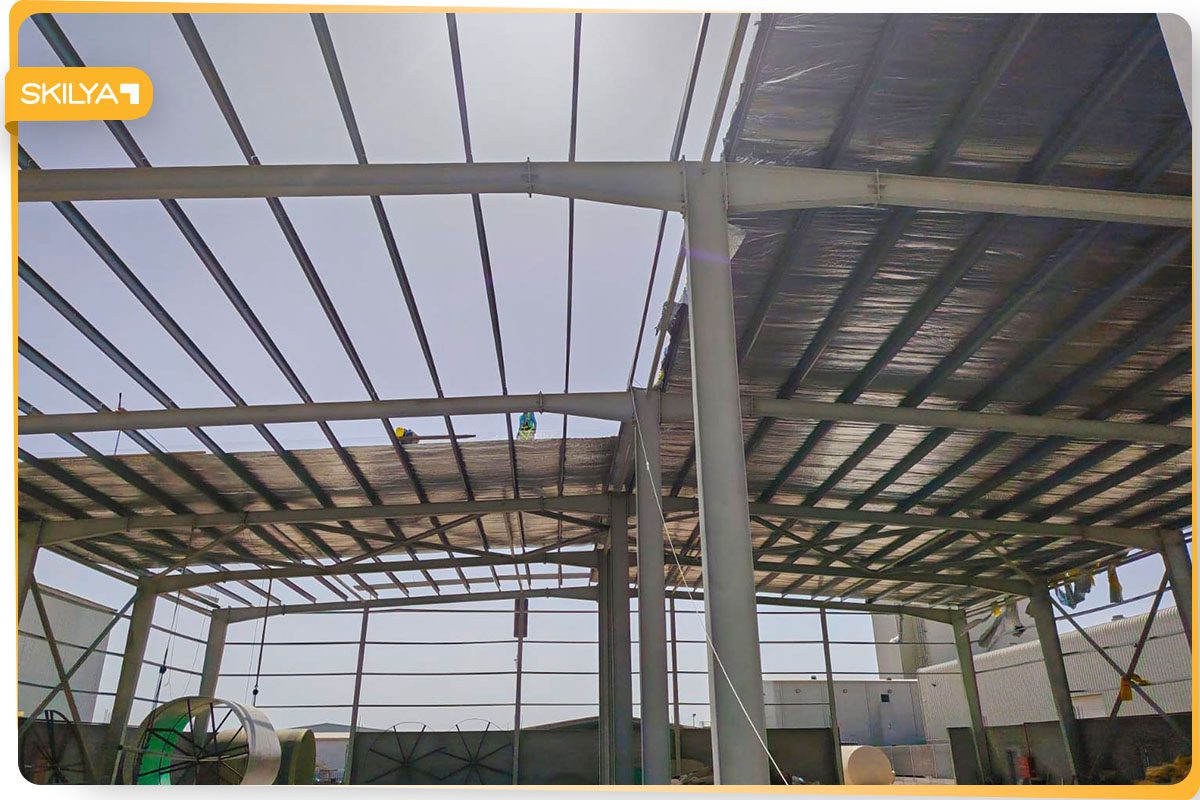
The structural system is the backbone of any factory. It must support the building’s size, roof system, equipment loads, wind loads, machinery needs, and operational requirements. Many factories use structural steel because it allows large open spaces, faster construction, flexible layouts, and wide spans with fewer internal columns.
Structural steel factory construction can be especially useful when the facility needs open production halls, warehouse spaces, high ceilings, or future expansion options. However, the design must be based on accurate requirements. The engineering team should understand equipment weights, loading points, overhead systems, roof loads, mezzanine requirements, and foundation needs.
The structural system should not only meet current needs. It should also consider possible future modifications. If the factory may add new equipment, increase storage loads, or expand production areas, this should be considered early.
Poor structural planning can create serious limitations. It may restrict machinery installation, reduce usable space, increase maintenance difficulty, or require costly modifications later.
Give Special Attention to Factory Flooring
Factory flooring is one of the most important parts of long-term operation. It must handle daily movement, heavy loads, machinery vibration, forklifts, cleaning, chemical exposure, and production activities depending on the industry.
A weak or poorly finished floor can create cracks, dust, uneven movement, drainage problems, and safety hazards. It can also disrupt production and increase maintenance costs.
The flooring system should be selected based on operational needs. Some factories require strong reinforced concrete floors. Others may need epoxy coatings, anti-slip surfaces, chemical-resistant finishes, impact-resistant surfaces, or easy-clean flooring systems. Warehousing zones may require flatness and load resistance for storage racks and forklifts.
Proper floor construction includes soil preparation, sub-base compaction, reinforcement, concrete mix quality, joint planning, curing, surface finishing, and protection during construction. Flooring should never be treated as a minor finishing item in factory construction. It is a core operational element.
Coordinate MEP Systems Early
MEP systems in factories are more complex than in many ordinary buildings. Mechanical, electrical, and plumbing systems must support production, safety, worker comfort, utilities, equipment, and compliance requirements.
Electrical systems must be designed to support machinery, lighting, panels, emergency systems, control systems, and future load expansion. HVAC and ventilation must support temperature control, air quality, worker comfort, and process requirements. Plumbing and drainage must support water use, cleaning, staff facilities, production needs, and waste management.
Fire protection systems must be carefully designed according to the facility type, stored materials, production risks, and authority requirements. This may include fire alarms, sprinklers, firefighting networks, pumps, emergency lighting, and exit routes.
MEP coordination should start early, not after structural works are completed. Equipment locations, service routes, shafts, ceiling heights, access points, maintenance zones, and utility rooms must be coordinated with the factory layout and structure. Good MEP coordination reduces rework and improves long-term building performance.
Plan Ventilation and Climate Control
Factory ventilation and climate control directly affect worker comfort, product quality, equipment performance, and energy consumption. In Saudi Arabia, climate conditions make HVAC and ventilation planning especially important for many industrial facilities.
Some factories require controlled temperature and humidity. Others require strong ventilation to remove heat, dust, fumes, odors, or process air. Warehouses may require ventilation and insulation to reduce heat buildup. Production areas may need different systems from offices or staff facilities.
Poor ventilation can create uncomfortable working conditions, reduce productivity, damage products, increase energy costs, or create safety risks. Good ventilation planning improves comfort, safety, and operational efficiency.
The HVAC and ventilation strategy should be designed according to the factory activity, building size, roof height, equipment heat load, occupancy, insulation, and energy goals.
Build Fire Safety into the Design
Fire safety is a critical requirement in factory construction. Industrial facilities may include machinery, electrical loads, packaging materials, raw materials, stored products, fuel, chemicals, or production processes that increase fire risk. Fire safety must be planned from the design stage and executed carefully during construction.
Fire protection systems should match the facility’s risk profile. This may include fire detection, sprinkler systems, hose reels, fire pumps, fire-rated areas, emergency exits, evacuation routes, emergency lighting, smoke control, and firefighting access.
Fire safety also depends on the building layout. Storage areas, production zones, electrical rooms, escape routes, and loading areas must be planned properly. Final approvals may depend on whether fire protection systems meet authority and civil defense requirements.
A professional construction contractor understands that fire safety is not only about installing equipment. It is about integrating safety into the entire factory design.
Plan Loading, Access, and External Works
Factory operation depends heavily on external movement. Trucks, delivery vehicles, staff cars, forklifts, and service vehicles must move safely and efficiently around the site. External works should support this movement.
Roads, parking areas, loading docks, gates, drainage, lighting, security access, and storage yards must be designed according to the factory’s daily operations. Poor external planning can cause traffic problems, delays in loading and unloading, safety hazards, and damage to roads or surfaces.
Heavy vehicles require durable pavement and proper turning radius. Loading areas should be positioned to reduce conflict with staff movement. Drainage should prevent water accumulation near entrances, storage zones, or foundations.
External works are not secondary to factory construction. They directly affect how the factory operates every day.
Consider Maintenance from the Beginning
A factory that is difficult to maintain will create problems after handover. Maintenance access should be planned during design and construction, not added later. MEP equipment, panels, pumps, HVAC units, fire systems, drainage points, roofs, doors, and industrial systems must be accessible for inspection and repair.
If maintenance access is poor, even simple repairs can become costly and disruptive. For example, equipment installed in tight spaces may be difficult to service. Hidden MEP routes without access points can make troubleshooting harder. Poor roof access can delay maintenance of HVAC or ventilation units.
Long-term factory operation depends on easy maintenance. A professional contractor helps ensure that systems are installed in a way that supports future operation and servicing.
Prepare for Future Expansion
Factories often grow as business demand increases. A facility may need additional production lines, more storage, new machinery, larger offices, or expanded loading areas. If future expansion is not considered early, growth may become expensive or difficult.
Planning for future expansion may include leaving available land, designing flexible structural systems, allowing extra electrical capacity, planning utility routes, considering future MEP connections, and creating layouts that can be extended.
Investors should discuss expansion possibilities with the design and construction team before the project begins. Even if expansion does not happen immediately, preparing for it can save significant cost later.
Focus on Quality Control During Construction
Factory construction requires strict quality control because the building must support continuous operation. Poor execution can lead to structural issues, leaks, floor failures, electrical problems, HVAC inefficiency, fire safety issues, or finishing defects.
Quality control should cover every stage, including earthworks, foundations, steel structure, concrete works, roofing, cladding, flooring, MEP installation, fire protection, finishing, external works, testing, and commissioning.
A professional contractor uses site supervision, inspections, material approvals, method statements, and consultant coordination to protect quality. Work must be checked before being covered or moving to the next stage.
Quality control during construction reduces maintenance problems after operation begins.
Testing, Commissioning, and Handover
Before a factory begins operation, all systems must be tested and commissioned. This includes electrical systems, HVAC, ventilation, plumbing, drainage, fire protection, lighting, pumps, panels, and other building systems. Testing confirms that the factory is ready for safe and functional use.
Final handover should include as-built drawings, operation manuals, warranties, test reports, inspection records, authority approvals, and maintenance instructions. These documents help the owner operate the factory and manage future maintenance.
A factory should not be handed over only because construction work appears complete. It should be handed over when it is tested, documented, approved, and ready for operation.
Why Skilya Supports Long-Term Factory Construction
Skilya Construction Company provides integrated construction and contracting services for industrial and commercial projects across Saudi Arabia and the Gulf region. The company supports factory construction through general contracting, civil works, structural steel, MEP systems, HVAC, electrical works, plumbing, fire protection, finishing works, infrastructure, road construction, and interior-related services.
Skilya understands that factory construction must support long-term operations, not just short-term project completion. By focusing on planning, structural execution, MEP coordination, safety, quality control, external works, and final handover, Skilya helps project owners build facilities that are practical, durable, and ready for operation.
For investors and business owners looking for a reliable construction company in Saudi Arabia, Skilya offers the technical capabilities needed to deliver factory projects with long-term value.
Conclusion
Factory construction requires careful planning, operational understanding, strong structural design, coordinated MEP systems, safety planning, durable flooring, practical external works, and future expansion thinking. A factory is not only a building. It is a working environment that must support production, logistics, safety, maintenance, and business growth.
Investors who plan factories only from a construction perspective may face operational problems later. Investors who plan with long-term operation in mind can build facilities that support productivity, efficiency, and future development.
Working with an experienced construction partner like Skilya can help business owners reduce risks and create factories that are built for performance, durability, and long-term success.
FAQs
What is factory construction?
Factory construction is the process of planning and building industrial facilities used for manufacturing, production, storage, logistics, and related business operations.
What should be considered before building a factory?
Key factors include site location, operational workflow, structural requirements, flooring, MEP systems, fire safety, ventilation, loading areas, external works, maintenance access, and future expansion.
Why is MEP coordination important in factory construction?
MEP coordination ensures that electrical, HVAC, plumbing, ventilation, fire protection, and utility systems are properly planned and installed to support factory operations safely and efficiently.
Why is flooring important in factories?
Factory floors must handle heavy loads, machinery, forklifts, vibration, cleaning, and continuous movement. Poor flooring can cause cracks, safety risks, maintenance problems, and operational disruption.
Why choose Skilya for factory construction?
Skilya provides integrated factory construction services, including civil works, structural steel, MEP systems, HVAC, electrical, plumbing, fire protection, finishing, road construction, infrastructure, project management, and quality control.