

- seo
- February 22, 2026
Risk Management Strategies Used by Top Construction Companies
Construction projects operate in an environment filled with uncertainty. Design changes, procurement delays, safety incidents, regulatory approvals, and market fluctuations all introduce risks that can disrupt schedules and inflate costs. In Saudi Arabia’s fast-paced construction market, risk management is no longer a reactive process it is a strategic discipline applied by top construction companies from day one.
Understanding how leading contractors manage risk helps project owners protect investment value and achieve predictable project outcomes.
What Risk Management Means in Construction
Risk management in construction is the structured process of identifying, assessing, mitigating, and monitoring risks throughout the project lifecycle. It goes beyond insurance and contingency it is about proactive planning and informed decision-making.
Effective risk management addresses:
- Technical and design risks
- Schedule and procurement risks
- Cost and cash flow risks
- Safety and regulatory risks
Top construction companies embed risk management into every stage of project delivery.
Early Risk Identification During Planning
The most effective way to manage risk is to identify it early. Leading contractors analyze risks during planning and pre-construction stages, when mitigation options are widest and least costly.
Early risk identification includes:
- Reviewing design completeness and constructability
- Evaluating site conditions and access constraints
- Assessing procurement lead times and supplier reliability
By flagging risks early, contractors help owners make informed decisions before construction begins.
Design Coordination and Technical Risk Reduction
Design-related risks are among the most common causes of rework and delays. Top construction companies reduce these risks through strong design coordination and constructability reviews.
Key strategies include:
- Early involvement in design development
- Identifying clashes between disciplines
- Aligning design solutions with construction methods
Technical risk reduction improves buildability and reduces costly design changes during execution.
Procurement and Supply Chain Risk Management
Procurement risks such as late deliveries, price volatility, or supplier failure can derail project schedules. Leading contractors manage these risks through proactive procurement planning.
Effective procurement risk strategies include:
- Early identification of long-lead items
- Supplier prequalification and performance tracking
- Alternative sourcing plans for critical materials
Strong supply chain management stabilizes schedules and protects budgets.
Schedule Risk Management and Delay Mitigation
Schedule risk is one of the most visible threats in construction projects. Top contractors apply structured scheduling and monitoring to identify delays early.
Schedule risk strategies include:
- Realistic baseline schedules
- Critical path analysis
- Look-ahead planning and progress tracking
When delays occur, proactive mitigation such as resequencing or resource adjustment helps maintain momentum.
Cost Risk Management and Financial Control
Cost overruns often stem from unmanaged risks. Leading construction companies integrate cost risk management into daily project control.
Cost risk mitigation includes:
- Continuous cost forecasting
- Early assessment of variation impact
- Maintaining realistic contingencies
Linking cost control with risk monitoring allows timely financial decisions and avoids budget surprises.
Safety Risk Management on Construction Sites
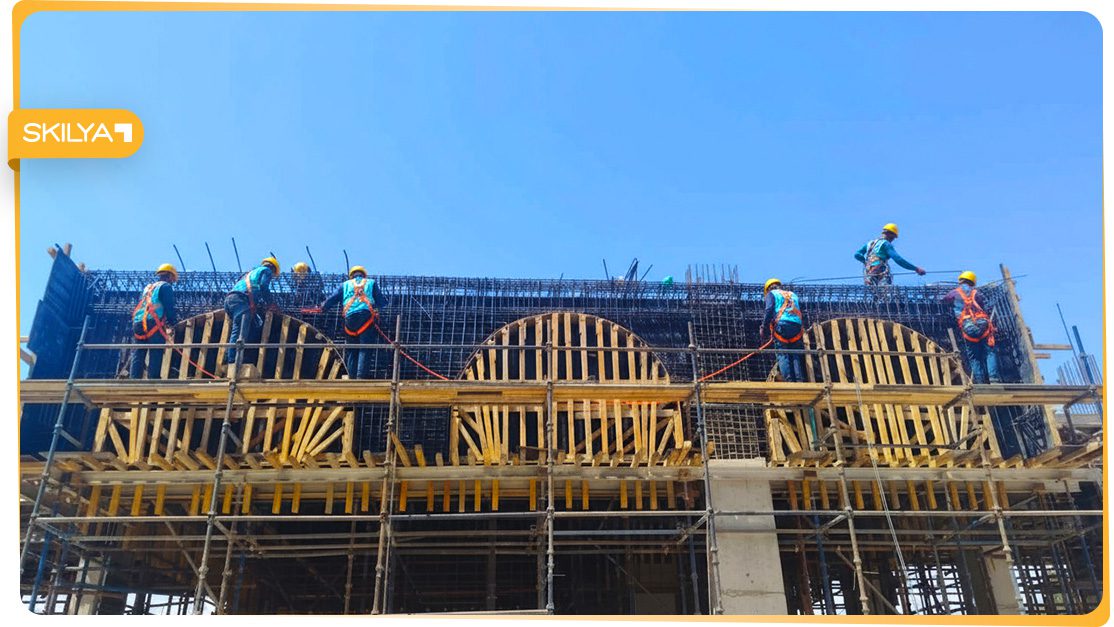
Safety risks threaten lives, schedules, and reputations. Top construction companies treat safety as a core risk management priority.
Safety risk strategies include:
- Detailed safety risk assessments
- Continuous training and supervision
- Strict enforcement of safety procedures
A strong safety culture reduces incidents and ensures uninterrupted project progress.
Regulatory and Approval Risk Management
In Saudi Arabia, regulatory approvals and authority coordination can introduce schedule risk. Experienced contractors manage this by understanding approval processes and engaging early with authorities.
Regulatory risk management includes:
- Early submission planning
- Clear documentation and compliance checks
- Continuous follow-up with authorities
This approach minimizes approval delays and redesign requirements.
Change Management as a Risk Control Tool
Uncontrolled changes are a major risk source. Top construction companies implement formal change management systems to control scope and impact.
Effective change control involves:
- Technical and commercial evaluation of changes
- Approval before implementation
- Updating schedules and budgets accordingly
Disciplined change management protects project stability.
Communication and Stakeholder Risk
Miscommunication is a hidden but significant risk. Leading contractors reduce this risk through transparent communication structures.
Clear reporting, regular coordination meetings, and defined decision paths ensure alignment and faster issue resolution.
Continuous Risk Monitoring and Review
Risk management is not a one-time exercise. Top construction companies continuously review risks as projects evolve.
Regular risk reviews:
- Track existing risks
- Identify new threats
- Update mitigation strategies
This dynamic approach keeps risk exposure under control throughout the project lifecycle.
Best Construction Company in Saudi Arabia
Strong risk management is a defining characteristic of a Best Construction Company in Saudi Arabia. Leading construction companies integrate risk identification, mitigation, and monitoring into their delivery models protecting schedules, budgets, and quality.
A top construction company understands that effective risk management transforms uncertainty into controlled outcomes.
How Skilya Manages Construction Risks
Skilya manages construction risks through early planning, engineering-led coordination, disciplined procurement, and continuous monitoring. By embedding risk management into project management systems, Skilya helps clients reduce exposure to delays, cost overruns, and execution issues.
This proactive approach ensures projects are delivered with greater predictability and long-term success.
Frequently Asked Questions (FAQ)
What is the biggest risk in construction projects?
Uncontrolled scope changes and procurement delays are among the most common.
Can risk be eliminated completely?
No but it can be managed effectively through planning and monitoring.
Is risk management only for large projects?
No. Projects of all sizes benefit from structured risk management.
Conclusion
Risk is inherent in construction but failure is not. By applying structured risk management strategies, top construction companies reduce uncertainty, protect budgets, and maintain schedule control. In Saudi Arabia’s complex construction environment, proactive risk management is essential to delivering reliable, high-performing projects from concept to completion.