

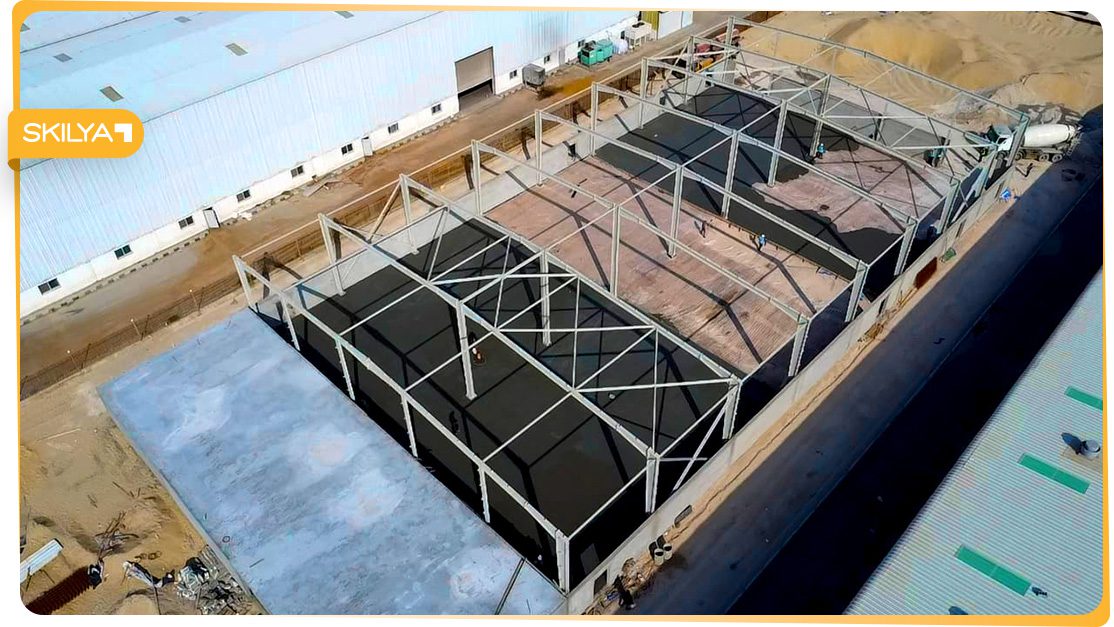
- seo
- February 21, 2026
How Contractors Deliver High-Durability Flooring for Industrial Projects
Industrial flooring is not just a surface it is a structural and operational component that directly affects safety, productivity, and equipment performance. In Saudi Arabia’s industrial sector, floors must withstand heavy static loads, continuous traffic, chemical exposure, and harsh operating conditions. Delivering high-durability flooring requires engineering precision, correct material selection, and disciplined execution.
Understanding how contractors achieve durable industrial floors helps project owners avoid premature failures, downtime, and costly repairs.
Why Industrial Flooring Durability Matters
Unlike commercial buildings, industrial facilities place extreme demands on floors. Forklifts, pallet jacks, heavy machinery, storage racks, and production lines all rely on floors to perform reliably.
Poor flooring performance can lead to:
- Cracking and joint failure
- Uneven surfaces affecting equipment accuracy
- Safety hazards and accidents
- Frequent maintenance and operational downtime
Durable flooring protects operations and preserves long-term asset value.
Early Assessment of Operational Requirements
High-durability flooring begins with understanding how the facility will operate. Contractors work with owners and engineers to assess:
- Equipment weights and load distribution
- Traffic type and frequency
- Chemical or thermal exposure
- Cleanliness and hygiene requirements
This early assessment guides flooring system selection and engineering design.
Structural Slab Design and Load Capacity
The foundation of durable flooring is the structural slab. Engineers design industrial slabs to support both static and dynamic loads without excessive deflection or cracking.
Key slab design considerations include:
- Slab thickness and reinforcement
- Subgrade preparation and compaction
- Load transfer mechanisms at joints
- Allowance for future load increases
A well-designed slab prevents structural distress and extends floor lifespan.
Subgrade Preparation and Base Layers
Many industrial flooring failures originate below the slab. Poor subgrade preparation leads to settlement, cracking, and uneven surfaces.
Professional contractors ensure durability by:
- Conducting soil assessments
- Compacting subgrade to required standards
- Installing appropriate base layers
- Controlling moisture conditions
Proper subgrade preparation provides a stable platform for long-term performance.
Joint Design and Crack Control
Joints are inevitable in concrete floors but poorly designed joints are a common failure point. High-durability industrial floors rely on engineered joint systems.
Effective joint strategies include:
- Optimized joint spacing
- Load-transfer dowels or plates
- Proper joint sealing
- Controlled crack-inducing techniques
Well-designed joints reduce random cracking and support smooth equipment movement.
Surface Flatness and Levelness
Many industrial operations require strict flatness and levelness tolerances. Uneven floors can disrupt automated systems, racking alignment, and material handling.
Contractors achieve precision through:
- Laser-guided leveling techniques
- Skilled finishing crews
- Continuous tolerance checks during placement
Accurate surface tolerances improve operational efficiency and safety.
Flooring Finishes and Protective Systems
Depending on the facility’s function, concrete slabs may be protected or enhanced with specialized finishes.
Common high-durability flooring solutions include:
- Polished concrete for abrasion resistance
- Epoxy or polyurethane coatings for chemical resistance
- Hardeners and sealers to reduce dusting
- Anti-slip finishes for safety
Selecting the right finish extends floor life and aligns performance with operational needs.
Chemical, Thermal, and Impact Resistance
Industrial floors are often exposed to oils, chemicals, temperature changes, and heavy impacts. Durability depends on selecting materials that resist these conditions.
Contractors evaluate:
- Chemical compatibility of coatings
- Thermal expansion behavior
- Impact resistance under heavy use
Matching materials to environmental conditions prevents premature degradation.
Construction Execution and Quality Control
Execution quality is as important as design. Even the best flooring system will fail if installed incorrectly.
Quality-focused contractors apply:
- Strict control of concrete mix and placement
- Proper curing methods
- Continuous inspection and testing
- Verification of thickness, reinforcement, and finishes
Disciplined execution ensures floors perform as designed.
Maintenance Planning for Long-Term Durability
Durable floors are designed with maintenance in mind. Contractors often support owners by providing guidance on:
- Cleaning methods
- Joint inspection and repair
- Coating renewal cycles
Proactive maintenance extends service life and minimizes operational disruption.
Industrial Flooring in Saudi Arabia’s Environment
Saudi Arabia’s climate and industrial activity levels require flooring systems that resist heat, dust, and heavy use. Local experience is essential to selecting materials and execution methods that perform reliably under these conditions.
Best Construction Company in Saudi Arabia
Delivering high-durability industrial flooring requires engineering expertise and execution discipline. Working with a Best Construction Company in Saudi Arabia ensures that flooring systems are designed, installed, and protected to meet heavy-duty industrial demands.
A leading construction company understands that industrial floors are long-term operational assets not just construction elements.
How Skilya Delivers High-Durability Industrial Flooring
Skilya delivers industrial flooring through engineering-led slab design, rigorous subgrade preparation, and precise execution. By aligning flooring systems with operational loads and environmental conditions, Skilya ensures industrial facilities receive durable floors that support safe, efficient, and uninterrupted operations.
This approach allows Skilya to deliver flooring solutions that perform reliably throughout the facility’s lifecycle.
Frequently Asked Questions (FAQ)
What causes most industrial floor failures?
Poor subgrade preparation, inadequate joint design, and low execution quality.
Are coatings always required for industrial floors?
Not always. It depends on chemical exposure, traffic type, and operational requirements.
Can industrial floors be upgraded later?
Yes, but early planning is more cost-effective than retrofitting.
Conclusion
High-durability flooring is a critical success factor in industrial construction projects. Through proper load assessment, engineered slab design, quality materials, and disciplined execution, contractors deliver floors that withstand heavy use and demanding conditions. In Saudi Arabia’s industrial market, durable flooring is essential to protecting operations, safety, and long-term facility performance.