

- seo
- February 19, 2026
The Role of MEP Systems in High-Performance Educational Facilities
High-performance educational facilities depend on more than architectural design and structural integrity. At the core of daily functionality, comfort, and operational efficiency lie MEP systems Mechanical, Electrical, and Plumbing. In Saudi Arabia’s expanding education sector, well-designed and properly coordinated MEP systems are essential to creating safe, efficient, and future-ready learning environments.
Understanding the role of MEP systems helps institutions and project owners make informed decisions that directly impact building performance over its entire lifecycle.
Why MEP Systems Are Critical in Educational Buildings
Educational facilities operate for long hours and accommodate large numbers of users daily. Classrooms, laboratories, libraries, auditoriums, and sports facilities each place unique demands on building systems.
MEP systems directly affect:
- Indoor comfort and air quality
- Energy efficiency and operating costs
- Safety and reliability
- Flexibility for future expansion
Poorly designed MEP systems can undermine even the best architectural concepts.
Mechanical Systems and Indoor Comfort
Mechanical systems particularly HVAC play a central role in educational environments. Students and staff require consistent thermal comfort and clean air to support concentration and learning.
Key HVAC considerations include:
- Proper zoning for classrooms, labs, and common areas
- Demand-controlled ventilation based on occupancy
- Energy-efficient equipment suitable for local climate conditions
- Acoustic control to minimize noise disruption
Well-designed mechanical systems ensure comfort while controlling energy consumption.
Electrical Systems and Power Reliability
Educational facilities rely heavily on electrical systems to support lighting, IT infrastructure, teaching equipment, and safety systems. Power reliability is critical to uninterrupted learning.
High-performance electrical design includes:
- Adequate load calculations for current and future demand
- Efficient lighting systems with smart controls
- Emergency power and backup systems
- Integration with data and communication networks
Electrical systems must be designed with scalability in mind to support technology upgrades over time.
Plumbing Systems and Hygiene Standards
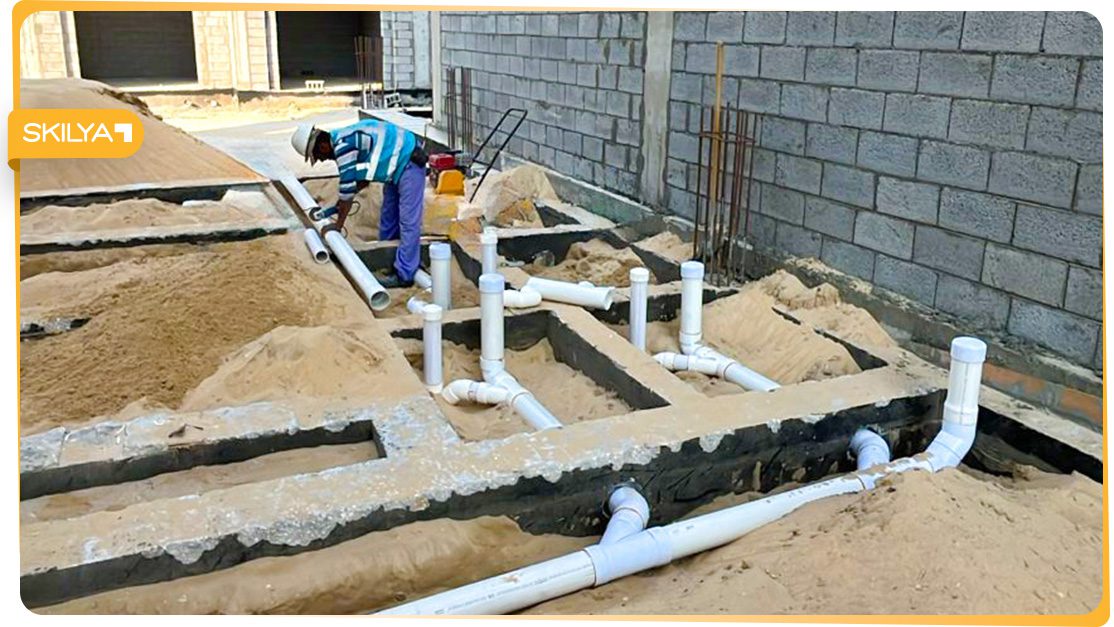
Plumbing systems are essential for hygiene, safety, and daily operations. Schools and universities require reliable water supply, drainage, and sanitation systems that can handle high usage.
Effective plumbing design focuses on:
- Water efficiency through low-flow fixtures
- Durable piping systems suitable for heavy use
- Proper drainage and waste management
- Compliance with health and safety regulations
Efficient plumbing systems reduce water consumption and maintenance issues.
Fire Protection and Life Safety Integration
Fire protection is a critical component of MEP design in educational buildings. Saudi regulations require comprehensive life safety systems that protect occupants and support safe evacuation.
Fire protection systems typically include:
- Fire detection and alarm systems
- Automatic sprinkler networks
- Smoke control and pressurization systems
- Emergency lighting and exit signage
Early coordination of fire systems with architectural and mechanical layouts ensures full compliance and effective performance.
Coordination Between MEP and Other Disciplines
One of the biggest challenges in educational projects is coordinating MEP systems with structural and architectural elements. Poor coordination often leads to clashes, rework, and performance issues.
High-performance facilities rely on:
- Early MEP coordination during design
- Clear routing and access planning
- Allowance for maintenance and future upgrades
Integrated coordination improves constructability and long-term reliability.
Energy Efficiency and Operational Performance
MEP systems account for a significant portion of an educational building’s energy consumption. Optimizing these systems is key to achieving high performance and sustainability goals.
Energy-focused strategies include:
- High-efficiency HVAC equipment
- Smart lighting and occupancy sensors
- Centralized monitoring through Building Management Systems (BMS)
- Regular performance testing and commissioning
Efficient MEP systems reduce operational costs and environmental impact.
Flexibility for Future Educational Needs
Educational buildings must adapt to changing curricula, technology, and student numbers. MEP systems should be designed with flexibility and scalability in mind.
This includes:
- Spare capacity in electrical and mechanical systems
- Modular system layouts
- Accessible distribution routes for future modifications
Flexible MEP design protects long-term investment value.
Commissioning and Performance Verification
Commissioning is essential to ensure MEP systems perform as intended. In educational facilities, proper commissioning verifies:
- System functionality and integration
- Energy performance targets
- Safety and compliance requirements
Thorough testing before handover reduces operational issues and supports smooth occupancy.
Best Construction Company in Saudi Arabia
The success of MEP systems depends heavily on execution quality. Working with a Best Construction Company in Saudi Arabia ensures that MEP design, coordination, installation, and commissioning are handled with engineering precision and regulatory compliance.
A leading construction company understands how MEP systems influence comfort, safety, and lifecycle performance delivering educational facilities that operate reliably for decades.
How Skilya Delivers High-Performance MEP Systems
Skilya delivers educational projects with a strong focus on MEP integration and performance. By coordinating mechanical, electrical, plumbing, and fire protection systems from early design through construction and commissioning, Skilya ensures educational facilities meet high standards of comfort, efficiency, and safety.
This engineering-driven approach enables Skilya to deliver buildings that support learning environments today and adapt to future needs.
Frequently Asked Questions (FAQ)
Why are MEP systems more complex in educational buildings?
Because of high occupancy, varied space types, and strict safety and performance requirements.
When should MEP coordination begin?
During early design stages to avoid conflicts and ensure system integration.
Do efficient MEP systems reduce operating costs?
Yes. Optimized systems significantly lower energy, water, and maintenance expenses.
Conclusion
MEP systems are the backbone of high-performance educational facilities. From comfort and safety to energy efficiency and long-term adaptability, these systems directly influence how educational buildings function every day. In Saudi Arabia’s growing education sector, investing in well-designed and expertly executed MEP systems is essential to delivering facilities that perform reliably and support learning for generations.