

- seo
- January 12, 2026
Chiller Systems vs DX Systems in Saudi Arabia_ How to Choose the Right HVAC Solution
Selecting the right HVAC system is one of the most critical decisions in any construction or retrofit project in Saudi Arabia. With extreme temperatures, long cooling seasons, and high energy consumption, the wrong system choice can lead to excessive operating costs, poor comfort, and frequent breakdowns.
Among the most common HVAC solutions used across the Kingdom are Chiller Systems and DX (Direct Expansion) Systems. Each system has its strengths, limitations, and ideal applications. As an experienced HVAC and MEP contractor, Skilya General Contracting helps clients choose the right system based on performance, energy efficiency, building type, and long-term operational goals.
Understanding the Two Main HVAC System Types
What Is a Chiller System?
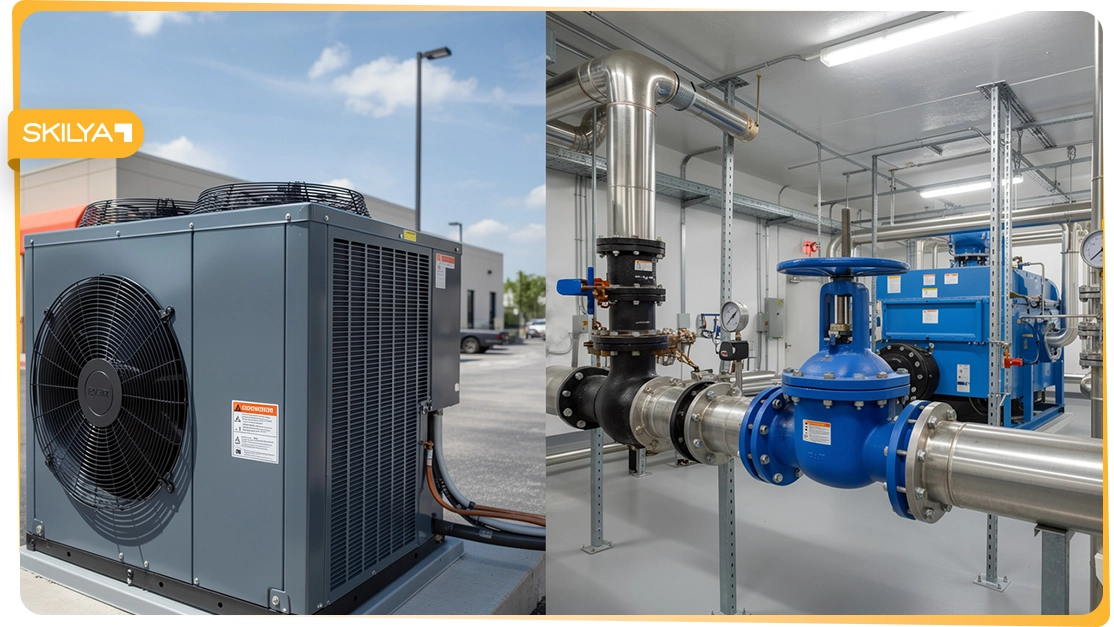
A chiller system works by producing chilled water that is distributed throughout the building to air handling units (AHUs) or fan coil units (FCUs). The chilled water absorbs heat from indoor spaces and returns to the chiller to be cooled again.
Chiller systems are typically used in:
- Large commercial buildings
- High-rise towers
- Hospitals and hotels
- Industrial facilities
- Campuses and large compounds
Chillers can be air-cooled or water-cooled, depending on project requirements and site conditions.
What Is a DX (Direct Expansion) System?
In a DX system, refrigerant is circulated directly between the outdoor condensing unit and the indoor cooling units. Heat is absorbed inside the space and rejected outdoors without using chilled water.
DX systems are commonly used in:
- Residential villas and apartments
- Small to medium commercial buildings
- Retail stores
- Light industrial facilities
Common DX configurations include split units, packaged units, VRF, and rooftop units.
Performance in Saudi Arabia’s Climate
Cooling Capacity and Peak Load Handling
Saudi Arabia’s climate places HVAC systems under extreme stress during peak summer months. Chiller systems are generally better suited for:
- Continuous operation
- High cooling loads
- Large floor areas
DX systems perform well in smaller or zoned spaces but may struggle when scaled up for very large buildings unless carefully designed.
Reliability Under High Ambient Temperatures
High outdoor temperatures reduce system efficiency. Chiller systems especially water-cooled chillers tend to maintain performance more consistently in extreme heat.
DX systems are more sensitive to high ambient temperatures, which can lead to reduced efficiency and higher compressor stress if not properly selected.
Energy Efficiency Comparison
Chiller Systems and Energy Optimization
Chiller systems offer strong energy optimization potential when designed correctly. Advantages include:
- Higher efficiency at partial loads
- Integration with variable speed drives (VFDs)
- Centralized energy management
- Compatibility with Building Management Systems (BMS)
For large buildings, chillers often deliver lower cost per ton of cooling over the system lifecycle.
DX Systems and Energy Consumption
DX systems can be energy-efficient for smaller applications, especially when:
- Load profiles are stable
- Spaces are independently controlled
- VRF technology is applied
However, as system size increases, DX solutions may result in higher energy consumption compared to centralized chiller plants.
Installation and Capital Cost Considerations
Initial Cost of Chiller Systems
Chiller systems typically require:
- Higher upfront investment
- Dedicated plant rooms
- Pumps, piping, and controls
However, this cost is often justified for large-scale projects due to long-term energy savings and durability.
Initial Cost of DX Systems
DX systems usually offer:
- Lower initial cost
- Faster installation
- Less infrastructure complexity
This makes them attractive for smaller projects, fast-track developments, or phased construction.
Maintenance and Long-Term Operation
Chiller System Maintenance
Chiller maintenance requires specialized expertise but offers long-term advantages:
- Centralized maintenance location
- Longer equipment lifespan
- Easier performance monitoring
With proper preventive maintenance, chiller systems can operate efficiently for decades.
DX System Maintenance
DX systems involve multiple distributed units, which means:
- Higher number of service points
- More frequent minor maintenance activities
- Easier component replacement
Maintenance costs can increase as the number of indoor and outdoor units grows.
Application-Based System Selection
Residential Buildings
DX systems are typically the preferred choice for:
- Villas
- Low-rise residential buildings
- Small apartment blocks
They offer flexibility, zoning, and cost efficiency for residential use.
Commercial Buildings
For offices, malls, and mixed-use developments:
- Small to medium buildings may use DX or VRF systems
- Large buildings benefit more from chiller systems
The decision depends on building size, occupancy patterns, and operating hours.
Industrial Facilities and Warehouses
Industrial buildings often require:
- High cooling capacity
- Robust operation
- Integration with ventilation and process cooling
Chiller systems are usually more suitable, especially when combined with AHUs and industrial ventilation systems.
Scalability and Future Expansion
Chiller systems offer superior scalability. Additional cooling capacity can often be added by:
- Installing additional chillers
- Expanding chilled water networks
DX systems are less flexible for large future expansions and may require full system redesign.
Integration with Smart Controls and BMS
Both systems can integrate with smart controls, but chiller systems typically offer:
- Better centralized control
- Advanced energy analytics
- Load optimization strategies
This makes chillers ideal for facilities aiming for long-term energy management and operational transparency.
How Skilya Helps Clients Choose the Right HVAC System
Skilya follows a structured decision-making approach:
- Detailed HVAC load analysis
- Building usage and operational study
- Energy cost modeling
- Capital vs lifecycle cost comparison
- Maintenance and operational capability assessment
This ensures clients select HVAC systems that are technically sound, economically viable, and future-ready.
There is no universal “best” HVAC system only the right system for the right application. In Saudi Arabia’s demanding climate, the choice between chiller systems and DX systems must be based on performance, efficiency, scalability, and long-term operational goals.
As an experienced HVAC contractor, Skilya General Contracting helps clients make informed HVAC decisions that balance comfort, energy efficiency, and cost control ensuring reliable cooling performance for years to come.